The world of proprietary trading has evolved dramatically over the past decade, with firms offering funded trading opportunities becoming increasingly sophisticated and accessible. Among these, topstep prop has established itself as a prominent player in the futures trading space, providing traders with structured pathways to earn capital and keep substantial portions of their profits. Understanding how these programs work, what rules govern them, and how they compare to other funding options has become essential knowledge for serious traders seeking to scale their operations without risking personal capital.
What Is Topstep Prop Trading
Topstep prop refers to the proprietary trading program offered by Topstep, a company that specializes in funded futures trading opportunities. Unlike traditional prop firms that require traders to work in-house, this model allows traders to prove their skills through evaluation challenges conducted entirely remotely.
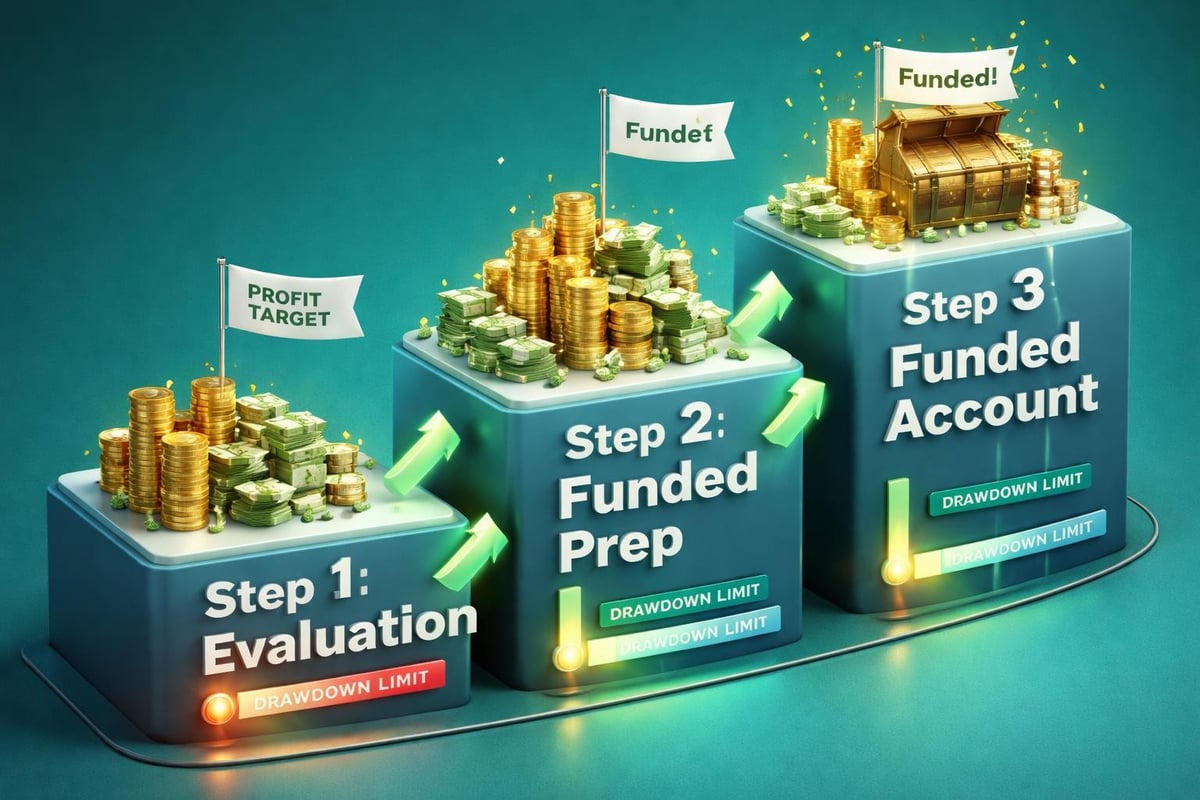
The fundamental concept behind topstep prop trading involves a two-phase evaluation process where traders demonstrate consistent profitability while adhering to specific risk management rules. Successful completion of these phases leads to a funded account where traders can execute live trades using the firm's capital.
The Evaluation Structure
The evaluation process consists of distinct phases designed to assess both profitability and risk management capabilities:
- Combine Phase: Traders must reach a profit target while respecting daily loss limits and maximum drawdown rules
- Funded Phase: Upon passing the Combine, traders receive access to a funded account with real capital
- Profit Sharing: Traders typically retain 80-90% of profits generated, depending on their account tier
This structured approach ensures that only disciplined traders who can manage risk effectively progress to trading live capital. The topstep prop evaluation model emphasizes consistency over aggressive trading, rewarding those who can generate steady returns.
Understanding Drawdown Rules in Topstep Prop
One of the most critical aspects of any topstep prop evaluation involves understanding and managing drawdown limitations. These rules protect both the firm and the trader from catastrophic losses while encouraging disciplined trading practices.
Types of Drawdown Limits
| Drawdown Type | Description | Reset Timing | Impact on Trading |
|---|---|---|---|
| Intraday Trailing | Follows your high-water mark during the session | Resets daily | Limits intraday risk exposure |
| End-of-Day | Based on account balance at market close | Fixed daily threshold | Allows recovery time overnight |
| Maximum Total | Overall account drawdown limit | Static throughout challenge | Hard stop for evaluation |
The differences between these drawdown types significantly affect trading strategies. Understanding prop firm drawdown rules becomes essential for developing approaches that align with program requirements while maximizing profit potential.
Intraday trailing drawdown follows the highest point your account reaches during a trading session. If you start the day with $50,000 and grow it to $51,500, your trailing drawdown limit adjusts upward from that new high. This dynamic approach rewards profitable trading while maintaining tight risk controls.
Managing Drawdown Effectively
Successful traders in topstep prop programs develop specific strategies for staying within drawdown parameters:
- Position sizing calculations that account for maximum potential loss per trade
- Daily stop-loss protocols that prevent approaching drawdown limits
- Scaling strategies that reduce exposure as accounts approach threshold levels
- Recovery plans for rebuilding equity after drawdown events
Many traders fail evaluations not because they lack profitable strategies, but because they violate drawdown rules through poor risk management. Developing awareness of real-time account metrics and maintaining discipline during losing streaks separates successful funded traders from those who repeatedly fail evaluations.
Prohibited Trading Strategies and Conduct
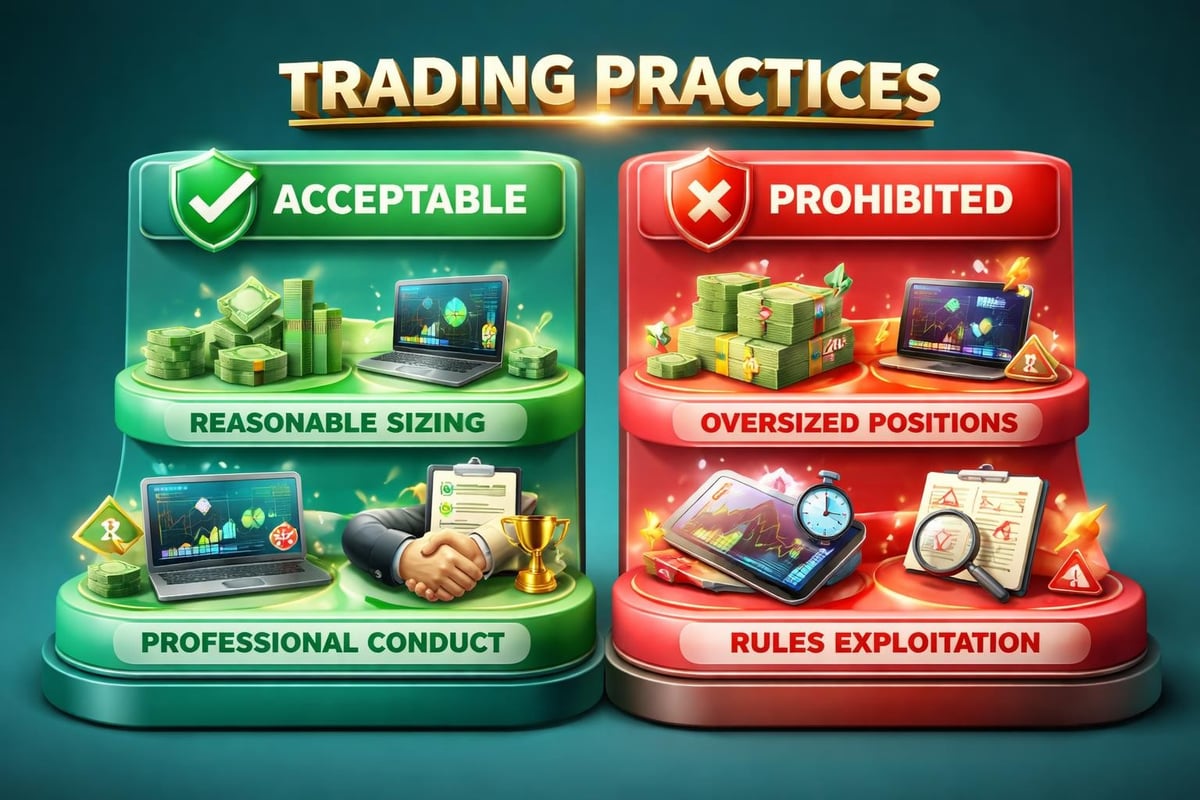
Every topstep prop program maintains strict guidelines regarding acceptable trading practices. These rules exist to ensure fair evaluation conditions and prevent exploitation of the simulated trading environment.
Common Prohibited Practices
The platform explicitly bans several trading approaches and behaviors. Prohibited trading strategies at Topstep include account manipulation tactics that would provide unfair advantages or circumvent evaluation integrity.
Account stacking represents one of the most serious violations, where traders open multiple accounts to hedge positions across different evaluations. This practice attempts to guarantee profits on one account while accepting losses on another.
Automated trading systems face restrictions depending on the specific program tier. Some topstep prop accounts permit algorithmic trading, while others require manual execution to properly evaluate discretionary trading skills.
High-frequency trading strategies that exploit platform latency or engage in arbitrage may violate terms of service. The evaluation environment uses simulated data feeds, making certain scalping approaches inappropriate for the program structure.
Behavioral Standards
Beyond specific strategies, prohibited conduct rules address broader ethical standards:
- Collaboration or signal sharing between traders with active evaluations
- Misrepresentation of trading experience during application processes
- Platform manipulation or attempts to exploit technical vulnerabilities
- Fraudulent documentation or identity verification issues
Understanding these boundaries before beginning an evaluation prevents costly mistakes and potential permanent bans from the platform. Similar to trading rules at other funded programs, compliance forms the foundation of long-term success.
Topstep Prop Account Options and Profit Splits
The topstep prop platform offers multiple account tiers, each with different capital allocations, profit targets, and fee structures. Selecting the appropriate tier depends on individual trading style, risk tolerance, and capital availability for evaluation fees.
Account Tier Comparison
| Account Size | Profit Target | Max Drawdown | Monthly Fee | Profit Split |
|---|---|---|---|---|
| $50,000 | $3,000 | $2,000 | $165 | 80% |
| $100,000 | $6,000 | $3,000 | $325 | 80% |
| $150,000 | $9,000 | $4,500 | $375 | 90% |
Larger account tiers offer higher profit splits but require greater profit targets and come with steeper monthly fees. Traders must evaluate whether the increased capital justification justifies the additional cost and performance pressure.
The profit split structure in topstep prop programs becomes particularly attractive for consistent traders. An 80% split on a $50,000 account means keeping $2,400 of a $3,000 profit target, while the 90% split on larger accounts maximizes earnings potential.
Scaling Opportunities
Successful funded traders can scale their capital allocation over time. Performance-based increases allow proven traders to manage larger positions and generate proportionally greater profits while maintaining the same percentage splits.
The scaling process typically requires:
- Consistent profitability over multiple months
- Adherence to all trading rules and drawdown limits
- Demonstrated risk management across various market conditions
- Approval through formal review processes
This growth pathway mirrors the experience many traders seek when considering prop firm evaluation opportunities across the industry.
Real User Experiences and Industry Reputation
Evaluating topstep prop through the lens of actual trader experiences provides valuable insights beyond marketing materials and program specifications. The firm's reputation within the trading community reflects both strengths and challenges inherent in the funded trader model.
Customer Feedback Analysis
User reviews on Trustpilot reveal mixed experiences, with ratings spanning from highly positive to critical. Common themes in positive reviews include:
- Professional customer service responsiveness
- Clear rule communication and fair evaluation processes
- Timely payout processing for funded traders
- Educational resources and trading support
Negative feedback frequently centers on specific concerns:
- Evaluation difficulty: Some traders report profit targets require exceptional consistency
- Fee structures: Monthly subscription costs during extended evaluation periods
- Rule violations: Inadvertent breaches of complex rule sets leading to disqualification
- Platform limitations: Technical issues or data feed inconsistencies
Independent analysis from sources like Day Trading Insights and Trends on Wall Street provides balanced perspectives that acknowledge both genuine opportunities and legitimate challenges within the topstep prop ecosystem.
Safety and Credibility Assessment
Due diligence regarding any topstep prop commitment should include verification of the firm's regulatory status and operational transparency. Detailed safety analysis examines background, longevity, and business practices that indicate legitimacy versus potential red flags.
Established in 2012, the company has operated for over a decade, building track records and funding numerous traders. This longevity provides some assurance compared to newer entrants without proven operational history.
The firm maintains transparency regarding its simulated trading environment, clearly distinguishing evaluation phases from live funded trading. This honesty about program structure helps traders set realistic expectations and understand what they're purchasing.
Strategic Approaches for Topstep Prop Success
Passing a topstep prop evaluation requires more than profitable trading skills. Strategic preparation, psychological discipline, and systematic risk management separate successful candidates from those who repeatedly fail challenges.
Pre-Evaluation Preparation
Before committing financial resources to an evaluation, traders benefit from thorough preparation:
- Demo practice with exact rule parameters to internalize drawdown limits and profit targets
- Strategy backtesting against historical data covering various market conditions
- Position sizing calculations that keep maximum risk well below drawdown thresholds
- Schedule planning to ensure adequate trading time during evaluation periods
Many traders underestimate the psychological pressure of trading with specific profit targets and loss limits. Practice under similar constraints builds the mental resilience needed for actual evaluations.
Risk Management Protocols
Successful topstep prop traders implement systematic risk controls:
- Maximum risk per trade: Typically 0.5-1% of account balance to prevent rapid drawdown
- Daily loss limits: Personal thresholds below official limits to provide safety margins
- Consecutive loss rules: Stopping after 2-3 losing trades to prevent emotional decision-making
- Scaling strategies: Reducing position sizes when approaching drawdown limits
These protocols align with the comprehensive trading rules overview that successful candidates must master.

Market Selection and Trading Style
Different futures markets present varying volatility profiles and capital requirements. Topstep prop traders must select instruments that match their:
- Experience level and market knowledge
- Available trading hours and session preferences
- Capital efficiency needs and margin requirements
- Volatility tolerance and profit target timelines
Common market choices include ES (E-mini S&P 500), NQ (E-mini Nasdaq), CL (Crude Oil), and GC (Gold). Each market demands different technical approaches and risk management parameters.
Scalpers may find the tight drawdown limits challenging, while swing traders might struggle to reach profit targets within evaluation timeframes. Finding the optimal balance between trading style and program requirements often determines success rates.
Comparing Topstep Prop to Alternative Funding Options
The funded trading industry offers numerous alternatives to topstep prop, each with distinct advantages, limitations, and ideal candidate profiles. Understanding these differences helps traders select programs aligned with their specific circumstances and goals.
Key Differentiators
Market focus represents the primary distinction. Topstep prop specializes exclusively in futures markets, while many competitors offer forex, stocks, or multi-asset platforms. Traders committed to futures benefit from Topstep's specialized expertise and market-specific support.
Evaluation structure varies significantly across providers. Some offer single-phase challenges, instant funding options, or skill-based assessments rather than profit target requirements. The two-phase topstep prop model emphasizes consistency but requires longer timeframes than some alternatives.
Profit split arrangements range from 50% to 95% across the industry. While topstep prop offers competitive 80-90% splits, some competitors provide higher percentages or faster scaling opportunities.
Alternative Consideration Factors
| Factor | Topstep Prop | Forex Alternatives | Multi-Asset Platforms |
|---|---|---|---|
| Primary Markets | Futures only | Forex, indices, commodities | Stocks, forex, crypto |
| Evaluation Phases | Two-phase | One or two-phase | Varies by tier |
| Profit Split | 80-90% | 75-90% | 70-95% |
| Scaling Speed | Performance-based | Often faster | Varies significantly |
Traders exploring instant funded prop firms or those interested in funded stock trading accounts may find better alignment with programs offering immediate capital access or equity market focus.
The choice between topstep prop and alternatives often depends on individual priorities regarding market preference, evaluation difficulty, fee structures, and support resources. Comprehensive FAQ resources can help traders compare features systematically before committing to specific programs.
Advanced Considerations for Topstep Prop Traders
Beyond basic program mechanics, experienced traders consider nuanced factors that significantly impact long-term profitability and career development within the topstep prop ecosystem.
Tax Implications and Business Structure
Funded trading generates income with specific tax characteristics depending on jurisdiction and business structure. Traders should understand:
- Classification as trading income versus capital gains for tax purposes
- Self-employment tax obligations for funded traders operating as independent contractors
- Business entity structures that may optimize tax treatment and liability protection
- Expense deductibility for evaluation fees, data subscriptions, and trading infrastructure
Consulting with tax professionals familiar with proprietary trading arrangements prevents costly mistakes and optimizes net profitability from funded account earnings.
Career Progression Pathways
Successful topstep prop traders often leverage their funded account experience toward broader career opportunities:
- Building track records for institutional trading positions or hedge fund roles
- Developing educational businesses teaching evaluation success strategies
- Creating trading signal services based on proven methodologies
- Consulting for aspiring funded traders seeking mentorship and guidance
The skills and discipline required to pass evaluations and maintain funded status translate to valuable credentials in the broader trading industry.
Long-Term Profitability Analysis
Sustainable success in topstep prop requires analyzing profitability across multiple timeframes and cost structures:
Break-even calculations must account for monthly subscription fees, evaluation costs for failed attempts, and time investment. A trader paying $165 monthly who takes four months to pass needs to generate over $660 in profits just to break even on fees.
Opportunity cost comparisons help evaluate whether the topstep prop pathway provides better returns than alternative uses of capital and time. Could evaluation fees fund a personal trading account that builds equity over time? Does the profit split justify the constraints compared to trading independently?
Risk-adjusted returns matter more than absolute profit numbers. A funded trader generating $2,000 monthly at 80% split ($1,600 net) while risking no personal capital achieves different risk-reward profiles than someone trading personal funds with unlimited upside but complete loss exposure.
These calculations vary dramatically based on individual trading performance, consistency, and alternative opportunities available to each trader.
Technological Infrastructure and Platform Considerations
The trading platform and technological infrastructure supporting topstep prop evaluations significantly impact trader experience and success potential. Understanding these systems helps traders prepare appropriately and avoid technical complications during critical evaluation periods.
Platform Specifications
Topstep prop utilizes specific trading platforms depending on account type and trader preference. Common platforms include:
- Tradovate: Web-based platform with modern interface and mobile capabilities
- NinjaTrader: Desktop application favored by algorithmic traders and advanced discretionary traders
- TradingView integration: Chart analysis tools connecting to execution platforms
Each platform offers distinct advantages regarding order execution speed, charting capabilities, indicator libraries, and automation potential. Traders should gain comprehensive familiarity with their chosen platform before beginning evaluations to avoid learning curves during active challenges.
Data Feed Quality and Consistency
Evaluation environments use simulated data feeds that replicate live market conditions. Understanding the characteristics of these feeds prevents confusion and helps traders set appropriate expectations:
Latency differences between simulated and live environments may affect strategies dependent on millisecond execution precision. High-frequency approaches might show different performance profiles across environments.
Slippage simulation attempts to replicate realistic fill prices but may vary from actual live market conditions during high volatility periods. This affects stop-loss execution and profit target fills.
Market depth representation in simulated feeds provides liquidity estimates but cannot perfectly mirror live order book dynamics during fast-moving markets.
Traders should review detailed information about platform policies and technical specifications before committing to evaluations to ensure their strategies align with infrastructure capabilities.
Technical Support and Problem Resolution
Reliable technical support becomes critical during active evaluations when platform issues could jeopardize progress toward profit targets. Topstep prop provides support through multiple channels:
- Email ticketing systems for non-urgent inquiries
- Live chat during trading hours for immediate assistance
- Phone support for critical technical issues
- Knowledge base with troubleshooting guides and platform tutorials
Traders should test support responsiveness during trial periods or before purchasing evaluations to ensure adequate assistance availability when needed most.
Psychological Preparation for Funded Trading Success
The mental and emotional aspects of topstep prop evaluations often prove more challenging than technical trading skills. Psychological preparation separates traders who consistently pass challenges from those who possess profitable strategies but cannot execute them under evaluation pressure.
Performance Pressure Management
Trading with explicit profit targets and loss limits creates psychological pressure distinct from discretionary personal account trading:
Target fixation leads traders to over-trade or force setups to reach profit goals faster. This desperation mentality typically results in rule violations or excessive risk-taking that triggers drawdown limits.
Loss aversion amplification becomes more intense when each losing trade moves accounts closer to disqualification. The fear of failure can cause traders to hold losing positions too long, hoping for reversals rather than accepting small losses.
Evaluation timeframe anxiety pressures traders to perform within subscription periods, creating urgency that conflicts with patient, disciplined trading approaches.
Successful traders develop mental frameworks that treat evaluations as extended practice sessions rather than high-stakes tests, reducing psychological pressure while maintaining professional execution standards.
Building Consistency Under Constraints
The topstep prop model rewards consistency over spectacular single-day performances. Developing this steadiness requires:
- Process focus over outcome focus: Emphasizing execution quality rather than daily P&L results
- Routine establishment: Creating pre-market preparation and post-trade review habits
- Emotional regulation techniques: Implementing breathing exercises, break protocols, or mindfulness practices
- Accountability structures: Maintaining trading journals or working with mentors to ensure discipline
These psychological skills translate directly to long-term trading success beyond evaluation environments, making the development investment worthwhile regardless of funded account outcomes.
Understanding topstep prop requires comprehensive knowledge of evaluation structures, risk management protocols, prohibited practices, and strategic approaches that align trading skills with program requirements. Success in these funded trading programs demands technical expertise, psychological discipline, and systematic preparation that extends well beyond basic market knowledge.
For traders seeking flexible evaluation paths, transparent profit-sharing arrangements, and professional support throughout their funding journey, Best Funded offers diverse challenge options designed to match various trading styles and experience levels. With profit splits up to 90% and clear, accessible rules, Best Funded provides an alternative pathway for traders ready to prove their skills and access capital without risking personal funds.