Imagine stepping into a prop firm trading challenge where you access six-figure capital, keep up to 90 percent of your profits, and never risk your own savings. In 2026, this opportunity is more accessible than ever, drawing traders from around the world.
This comprehensive guide is designed to help you master every aspect of a prop firm trading challenge. You will learn what these challenges are, how they work, the requirements to pass, proven strategies, common pitfalls, and how to select the right challenge for your goals.
Ready to unlock your trading potential? Let’s begin your journey to success.
Understanding Prop Firm Trading Challenges
Navigating a prop firm trading challenge is an essential step for any trader aiming to access institutional-level capital in 2026. These challenges have transformed the trading landscape, offering opportunities that were once reserved for professionals in hedge funds or investment banks. To succeed, you need a clear understanding of how these evaluations work, their structure, and the unique advantages they provide.
What is a Prop Firm Trading Challenge?
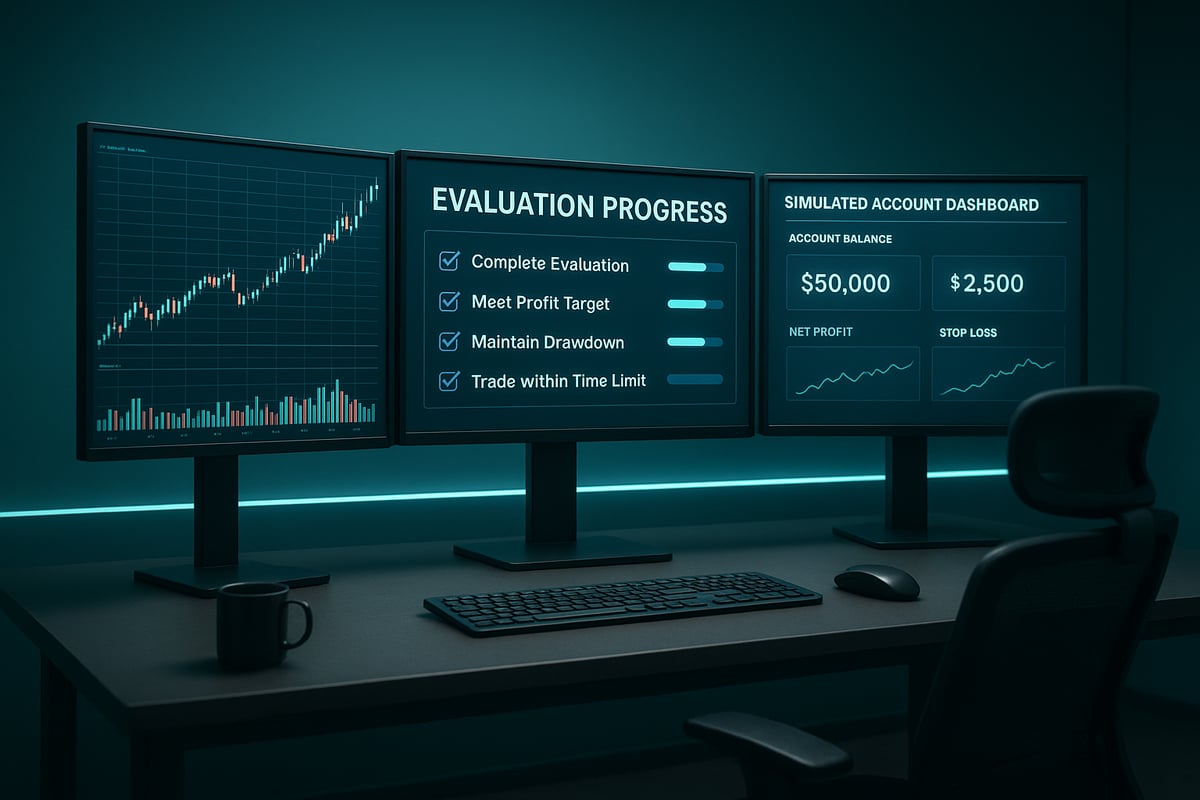
A prop firm trading challenge is an assessment process set by proprietary trading firms to identify skilled traders before granting them access to company capital. Unlike personal trading accounts, where you risk your own funds, these challenges allow you to prove your abilities without personal financial exposure.
The main purpose is to showcase your trading skill, discipline, and risk management. Firms want traders who can generate steady returns while respecting strict guidelines. Typically, a prop firm trading challenge uses a simulated account, where your trades are tracked in real time, but no real money is at risk during the evaluation.
For example, leading firms such as FTMO and MyForexFunds have popularized this model. Their challenges require traders to meet profit targets and adhere to risk limits over a defined period. The number of prop firms offering challenges has grown rapidly into 2025 and 2026, with thousands of new participants joining each month. This democratizes capital access, allowing talented individuals from any background to showcase their skills.
How Prop Firm Challenges Work
The process of a prop firm trading challenge usually follows a clear, step-by-step timeline. First, you register with the firm and select a challenge that fits your goals. Next, you enter the evaluation phase, which may have one or two stages. Each stage has rules, such as profit targets, maximum drawdown, and minimum trading days.
For instance, some challenges require you to achieve an 8% profit target in 30 days, without exceeding a 5% daily loss. You might complete a one-phase challenge or pass two phases before qualifying for funding. These rules are designed to protect both you and the firm.
Most firms use simulated accounts during the evaluation, switching to real capital only after you pass. The average pass rate for a prop firm trading challenge is between 5% and 10%, reflecting the strict standards. Firms use these challenges to identify disciplined traders and to reduce the risk of significant losses. For a detailed breakdown of how challenges are structured and evaluated, see the Prop Firm Evaluation Guide.
Types of Prop Firm Challenges in 2026
The prop firm trading challenge landscape has evolved, offering several formats to suit different experience levels. The most common are simulated trading challenges, where all trades are conducted in demo environments. These are ideal for beginners, as they carry no real risk.
Some firms now offer live capital challenges. Here, you trade a small amount of real money as a test, which can be more intense but also more rewarding. Tiered or multi-stage challenges are also on the rise. These require traders to progress through increasingly difficult stages, with rules becoming stricter at each step.
There are both free and paid challenges. Free challenges typically offer smaller account sizes and are more competitive, while paid challenges provide larger funding options and more flexibility. For example, Best Funded offers both one-phase and two-phase challenge options, reflecting industry trends in 2026. The diversity of challenge types ensures that traders can find a path that matches their experience and risk tolerance.
| Challenge Type | Risk Level | Accessibility | Best For |
|---|---|---|---|
| Simulated (Demo) | None | High | Beginners |
| Live Capital | Low | Moderate | Experienced traders |
| Tiered/Multi-stage | Varies | Moderate | Advanced traders |
| Free Challenge | None | Limited | Budget-conscious |
| Paid Challenge | None | High | All traders |
Benefits of Prop Firm Challenges
Participating in a prop firm trading challenge offers several unique benefits. First, you gain access to significant trading capital without risking your own money. This opens the door to larger profits and professional growth.
These challenges also foster discipline, risk management, and consistency—skills essential for long-term trading success. Many firms reward top performers with high profit splits (often 80-90%) and scaling plans, allowing you to manage larger accounts over time.
Community is another advantage. Traders join global networks, access mentorship, and benefit from shared resources. Success stories abound, with many individuals moving from passing a prop firm trading challenge to full-time trading careers.
In 2026, average funded account sizes have increased, and profit splits remain highly competitive. Prop firm challenges are now a preferred alternative to traditional trading career paths, making professional trading more accessible than ever.
Key Requirements to Pass a Prop Firm Challenge
Traders aiming to pass a prop firm trading challenge in 2026 must meet several strict requirements. Understanding these key areas is essential for maximizing your chances of securing a funded account. Let’s break down the core criteria every trader should master.
Profit Targets and Timeframes
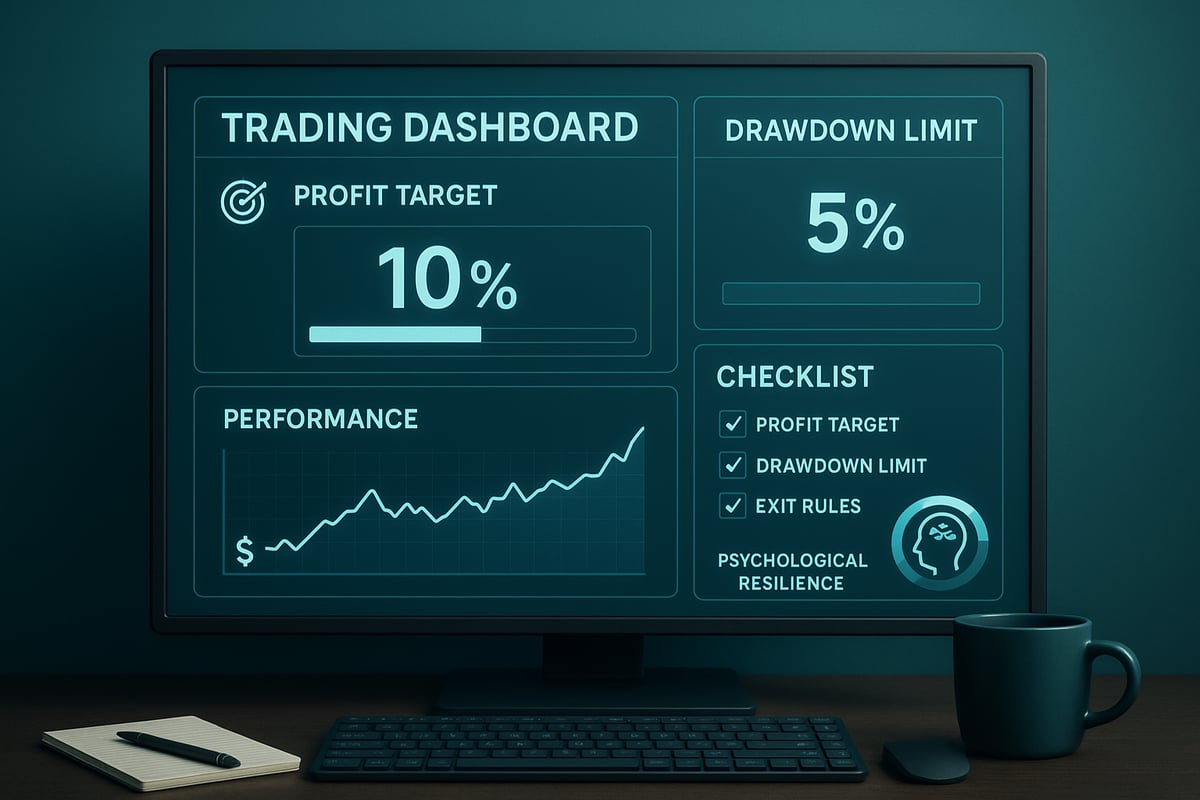
Every prop firm trading challenge sets specific profit targets that traders must reach within a set timeframe. Typically, you need to achieve a 5–10% return in 30 days, though some firms may extend this window or adjust targets based on account size. This structure encourages traders to balance ambition with discipline.
It’s important to plan your trades to meet these targets without excessive risk. For example, FTMO and Best Funded often require reaching an 8% profit target in the first phase. Across the industry, most prop firm trading challenge profit targets fall within this range to test both skill and risk management.
Profit targets are set at these levels to ensure traders can generate meaningful returns while demonstrating responsible trading. Finding the sweet spot between aggressive gains and careful strategy is key to passing your prop firm trading challenge.
Risk and Drawdown Limits
Risk management is at the heart of every prop firm trading challenge. Firms typically enforce strict drawdown limits, such as a maximum daily loss of 5% and an overall drawdown cap of 10%. Breaching these thresholds results in immediate disqualification, no matter how close you are to your profit target.
Here’s what you’ll commonly see:
- Max daily loss: 5% of total account value
- Overall drawdown: 10% from initial balance
- Trailing drawdown: Some firms use a moving threshold
Many traders fail prop firm trading challenge attempts by ignoring these boundaries. Data shows that the majority of disqualifications stem from breached drawdowns, not missed profit targets. These rules protect both the firm’s capital and the trader’s discipline, emphasizing the importance of careful risk control throughout the process.
Trading Rules and Discipline
Success in a prop firm trading challenge depends on strict adherence to trading rules. These often include minimum trading days, lot size restrictions, and bans on trading certain news events or holding positions overnight. Every firm has its own set of requirements, so it’s crucial to study them in detail.
Common rule violations include:
- Trading outside permitted hours
- Exceeding position size limits
- Ignoring news trading restrictions
- Failing to meet minimum active trading days
Disqualification is automatic if any rule is broken, regardless of profits. For a full overview of what’s required, review the Trading Rules and Requirements before starting your challenge. Understanding and following these rules shapes consistent, professional trading behavior, which is exactly what firms look for in funded traders.
Consistency and Trading Style
Prop firms value consistency over short bursts of luck. During a prop firm trading challenge, you must demonstrate steady performance, not just a single big win. Firms often use consistency metrics, such as average daily return and trade frequency, to evaluate your approach.
Traders who pass typically:
- Maintain similar position sizes
- Avoid large swings in daily profit and loss
- Show stable returns across the evaluation period
Data shows that a higher percentage of traders succeed in a prop firm trading challenge when their results are even and repeatable, rather than volatile. Consistency proves to firms that you can manage risk and adapt to changing market conditions, which is vital for long-term success.
Psychological and Emotional Control
The psychological aspect of a prop firm trading challenge is often underestimated. High-pressure evaluations can trigger stress, leading to revenge trading or impulsive decisions. Many traders who fail do so not because of strategy, but due to emotional mistakes.
To build resilience, consider:
- Practicing mindfulness or meditation
- Keeping a detailed trading journal
- Setting clear boundaries for trading sessions
Surveys reveal that traders with strong emotional control have significantly higher pass rates in prop firm trading challenge environments. Developing psychological tools and routines helps you stay focused and composed, greatly improving your odds of passing and securing funding.
Step-By-Step Guide: How to Succeed in a Prop Firm Challenge
Embarking on a prop firm trading challenge in 2026 requires more than just trading skill. Success depends on preparation, discipline, and strategic decision-making at every stage. Follow this structured, actionable guide to maximize your chances of passing a prop firm trading challenge and unlocking the benefits of a funded account.

Step 1: Choose the Right Prop Firm and Challenge
Selecting the right prop firm trading challenge is your foundation for success. Begin by researching the reputation and transparency of each firm. Look for clear funding options, visible payout histories, and positive trader reviews.
Compare challenge structures carefully. One-phase challenges offer quicker evaluations, while two-phase models test consistency over time. Decide between free and paid options based on your budget and risk tolerance. Evaluate account sizes, entry fees, and profit split percentages to find what fits your trading style.
Use resources like Prop firm pass rates and success factors to compare industry benchmarks and understand what influences challenge outcomes. Matching your strategy with a challenge’s requirements is essential for a successful prop firm trading challenge journey.
Why Choose Best Funded for Your Prop Firm Challenge?
Best Funded stands out in the prop firm trading challenge landscape with its trader-centric approach. The firm offers high profit splits, up to 90 percent, and a range of flexible challenge formats including both one-phase and two-phase options.
Transparency is at the core of their operation. Rules are clear, account sizes are varied, and there are no hidden conditions. Fast payouts and 24/7 support ensure that traders have everything they need to succeed.
Real testimonials highlight the supportive community and the speed at which traders can access capital. In 2026, Best Funded’s entry fees and account size options offer flexibility for both new and experienced traders, making it a top choice for anyone pursuing a prop firm trading challenge.
Step 2: Prepare and Practice
Preparation is the backbone of any successful prop firm trading challenge. Start by using demo accounts and paper trading to refine your strategies in risk-free environments. Backtest your trading plans against historical data to validate your approach.
Study the specific rules of your chosen challenge. Create a detailed checklist to ensure compliance and avoid disqualification. Simulation exercises and maintaining a trading journal help build discipline and highlight areas for improvement.
Traders who dedicate time to preparation often see higher pass rates. The more you practice and adapt to the challenge rules, the more confident and emotionally stable you become in live evaluations. Consistent preparation is a key differentiator in the prop firm trading challenge process.
Step 3: Develop a Robust Risk Management Plan
Risk management is crucial in every prop firm trading challenge. Start by defining clear stop-loss and take-profit levels for all trades. Calculate position sizes based on account balance and the challenge’s drawdown limits.
Limit leverage and avoid overexposing your account. Use a risk management template, such as:
Account Size: $50,000
Max Risk Per Trade: 1%
Daily Drawdown Limit: $2,500
Max Open Trades: 3
Stop-Loss: Set per trade
This structured approach protects you from large losses and increases your chances of passing. Industry data consistently shows that disciplined risk management is the leading factor in prop firm trading challenge success. Conservative strategies may seem slow, but they are rewarded in the evaluation phase.
Step 4: Execute with Consistency and Discipline
Execution is where your plan meets reality in a prop firm trading challenge. Stick to your trading plan without deviation. Monitor your performance daily, but resist the urge to overtrade or chase losses.
Successful traders develop routines that foster discipline. For example, review your trading plan each morning, execute only high-probability setups, and end each session by logging results.
Prop firms value steady, consistent performance over erratic gains. Consistency metrics are tracked closely, and those who demonstrate discipline often receive funding offers faster in the prop firm trading challenge environment.
Step 5: Track, Analyze, and Adapt
Tracking every trade is essential for continuous improvement during a prop firm trading challenge. Record details such as entry, exit, rationale, and outcome in a trading journal or analytics dashboard.
Analyze your trades weekly to spot strengths and weaknesses. Use the data to refine your strategies, but only make changes supported by evidence. Adapting based on data, rather than emotion, is a hallmark of successful traders.
Templates and analytics tools can streamline this process. Traders who track and review their performance consistently improve their results and are more likely to pass a prop firm trading challenge.
Step 6: Navigate the Evaluation and Funding Process
After passing your prop firm trading challenge, you will undergo verification and compliance checks. Prepare all required documentation and be ready for a transition period as the firm reviews your performance.
The transition to a live funded account may come with scaling opportunities. Familiarize yourself with timelines and next steps so there are no surprises. Typically, funding is received within days to weeks after successful completion.
Understanding the process helps you plan for long-term growth and ensures a smooth path from challenge participant to funded trader in the prop firm trading challenge ecosystem.
Step 7: Avoid Common Pitfalls
Many traders fail a prop firm trading challenge due to avoidable mistakes. The most common pitfalls include over-leveraging, violating trading rules, inconsistent strategy, and emotional trading.
To prevent these, create a list of rules and review it before each session. Learn from real-life stories of traders who lost funding by breaking discipline or ignoring guidelines. Awareness is your first line of defense.
By planning ahead and maintaining focus, you reduce the risk of costly errors. With proper preparation and mindset, you can avoid these traps and increase your odds of success in any prop firm trading challenge.
Evaluating and Comparing Prop Firm Challenges
Assessing the right prop firm trading challenge is essential for maximizing your potential as a trader. With so many options in 2026, understanding the nuances in challenge types, structures, and support can make the difference between success and missed opportunities.
Free vs. Paid Challenges: Pros and Cons
When choosing a prop firm trading challenge, traders often weigh free versus paid options. Free challenges require no upfront capital, making them attractive for risk-averse beginners. However, these often come with lower funding amounts and stricter qualification criteria.
Paid challenges, on the other hand, grant access to larger trading capital and more flexible rules, but require an entry fee. This investment can be worthwhile for experienced traders seeking higher payouts and scalable accounts.
Consider your risk tolerance and goals when deciding. Free challenges offer a low barrier to entry, while paid challenges can accelerate your trading journey if you have the resources and confidence to invest.
Challenge Structures and Account Sizes
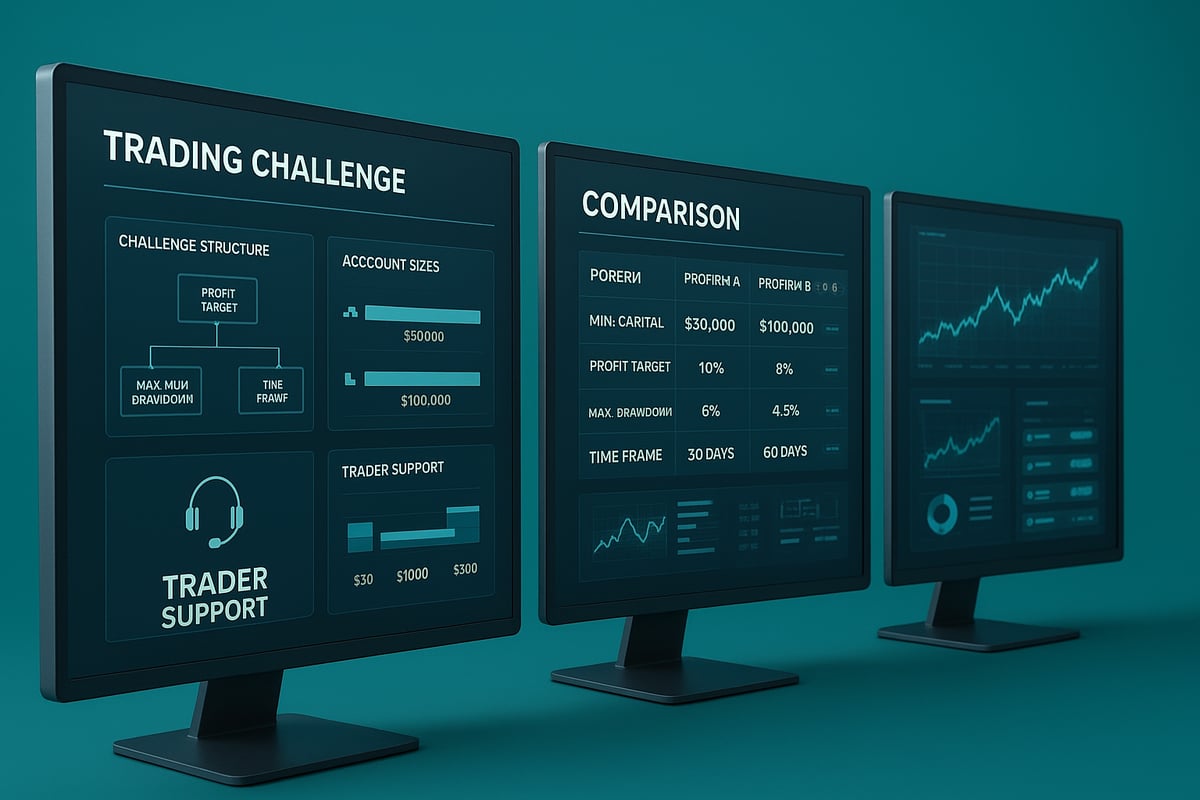
The structure of a prop firm trading challenge directly influences your experience and growth. Firms typically offer one-phase or two-phase challenges, each with distinct evaluation criteria and timelines. Account sizes can range from $5,000 to over $200,000, with varying profit targets and scaling plans.
Below is a sample comparison table:
| Firm Type | Phases | Account Sizes | Profit Split |
|---|---|---|---|
| One-Phase | Single | $10k–$100k | 80%–90% |
| Two-Phase | Evaluation | $5k–$200k | 70%–85% |
For a comprehensive overview of challenge structures and account sizes across hundreds of firms, review the prop firm challenge structures and account sizes comparison.
Matching your trading style to the right structure and account size is critical for long-term success in a prop firm trading challenge.
Support, Community, and Resources
A successful prop firm trading challenge experience goes beyond account size and rules. Top firms provide robust support, including 24/7 help desks, dedicated account managers, and access to educational resources.
Community engagement is another vital factor. Many prop firms host forums, webinars, and competitions, fostering a collaborative environment where traders can learn and share strategies.
Strong support and a vibrant community can boost morale and accelerate skill development. Seek firms that invest in trader education and offer tools like analytics dashboards and mentorship programs.
Transparency and Reputation
Transparency and reputation should guide your final decision when selecting a prop firm trading challenge. Research each firm’s track record, focusing on payout histories, client reviews, and clarity of rules.
Beware of hidden conditions or ambiguous terms, as these can lead to unexpected disqualifications. Reliable firms communicate openly and resolve issues promptly, earning trust within the trading community.
Prioritize firms with established reputations and clear, documented processes. This ensures a fair and supportive environment as you pursue your prop firm trading challenge goals.
Advanced Strategies and Trends for 2026 Prop Firm Challenges
The prop firm trading challenge environment in 2026 is evolving rapidly, demanding traders stay ahead of the curve. New rules, advanced technology, and a focus on mindset now define what it takes to succeed and scale. Understanding these advanced strategies and trends is essential for anyone aiming to pass and thrive in a prop firm trading challenge.
Adapting to Evolving Challenge Rules
Prop firm trading challenge rules are becoming more sophisticated in 2026. Firms now use AI-driven analytics and real-time monitoring to assess not just profitability, but also how traders manage risk and adapt to market conditions.
For example, many firms have introduced stricter compliance checks, anti-gaming measures, and ongoing behavioral analysis. This means traders must show not only skill, but also discipline and integrity throughout the evaluation.
A recent analysis of prop trading pass rates and influencing factors reveals that, as rules become more complex, pass rates are stabilizing between 5% and 10%. This underscores the importance of adapting to the latest requirements and staying current with industry standards.
Staying flexible and learning new rule sets is now a vital part of every prop firm trading challenge journey.
Leveraging Technology and Analytics
Technology is a game-changer in the prop firm trading challenge landscape. Advanced traders now use trading bots, algorithmic tools, and automated journaling to optimize their performance and decision-making.
Modern analytics dashboards provide real-time insights into trade metrics, risk exposure, and behavioral patterns. By leveraging these tools, traders can identify weaknesses, fine-tune strategies, and maintain consistency.
Tech-savvy participants in a prop firm trading challenge often outperform their peers by automating repetitive tasks and using data-driven methods. This not only helps with compliance but also boosts long-term profitability.
Adopting cutting-edge technology is no longer optional, but essential for anyone aiming to succeed in a prop firm trading challenge.
Building Psychological Resilience
Success in a prop firm trading challenge now hinges as much on mindset as on technical skill. High-pressure evaluations can trigger stress, anxiety, and emotional decision-making, which often lead to costly mistakes.
Top performers incorporate psychological routines such as meditation, journaling, and peer coaching into their daily practice. These tools help manage performance anxiety, recover from setbacks, and stay focused on long-term goals.
Developing resilience empowers traders to stick to their plans and avoid revenge trading, even after a losing streak. In 2026, firms increasingly value traders who show emotional control and adaptability throughout the prop firm trading challenge process.
Investing in mental fitness is a key differentiator for challenge success.
Scaling Up After Passing a Challenge
Passing a prop firm trading challenge is just the beginning. The next step is scaling up—transitioning from smaller funded accounts to larger ones and unlocking higher profit splits.
Most firms now offer structured scaling plans, allowing traders to grow their capital allocation as they demonstrate consistent results. Advancement often comes with additional evaluations and new performance metrics.
According to recent prop trading industry growth statistics, the number of traders scaling from $10k to $200k accounts is rising sharply. This reflects the increasing opportunity for sustainable, long-term career growth in prop trading.
Embracing the scaling process and continuous learning is crucial for maximizing the rewards of a prop firm trading challenge.
Frequently Asked Questions About Prop Firm Trading Challenges
Navigating the world of the prop firm trading challenge can raise many questions, especially as rules and opportunities evolve in 2026. Below, find concise answers to the most common trader concerns, supported by data, examples, and industry best practices.
What are the minimum requirements to join a prop firm trading challenge?
Most prop firms require you to be at least 18 years old, have a valid ID, and agree to their terms. Some firms may ask for proof of trading experience, but many challenges are open to all skill levels. Registration is usually online, making it accessible for most traders worldwide.
How much can I realistically earn as a funded trader in 2026?
Earnings depend on the size of your funded account, your trading performance, and the profit split offered. In 2026, average profit splits range from 75% to 90%. For a $100,000 account, a 10% monthly return could mean $7,500 to $9,000 in payouts, depending on your agreement. Remember, consistent results matter more than one-off gains in a prop firm trading challenge.
What happens if I fail a challenge can I try again?
Yes, most firms allow you to retake the prop firm trading challenge after a waiting period or by paying a new entry fee. Some offer discounted re-entries or free retries if you followed all rules but missed the profit target. Always check the firm's specific policy before starting.
Are there hidden fees or conditions I should watch for?
While reputable firms are transparent, some may have hidden costs or strict terms. Always review the challenge agreement and ask about recurring fees, withdrawal conditions, and scaling rules. To explore options with no upfront costs, review the Free Prop Firm Challenge Options for a comparison of fee structures.
How do prop firm challenges differ across forex, stocks, and crypto?
Each asset class has its own trading hours, volatility, and platform requirements. Forex challenges are the most common and generally offer 24/5 trading. Stock and crypto challenges may have different rules on leverage, news trading, and position sizing. Ensure the prop firm trading challenge you choose matches your preferred market.
What support and resources do top prop firms provide?
Leading firms offer educational materials, webinars, analytics dashboards, and active communities. Some provide mentorship and peer support to help you develop as a trader. Access to these resources can significantly improve your chances of passing the prop firm trading challenge.
Can I trade from any country, and are there restrictions?
Most prop firms accept traders from around the world, but some countries are restricted due to regulatory or legal reasons. Always verify eligibility before registering for a prop firm trading challenge. Firms typically list restricted regions in their FAQs or terms.
How do I avoid scams and ensure a firm is legitimate?
Research the firm's reputation, read independent reviews, and check payout history. Look for clear, published rules and transparent communication. For more guidance, consult the Frequently Asked Questions resource to help you identify trustworthy firms and avoid common pitfalls.
As you’ve seen throughout this guide, succeeding in a prop firm trading challenge comes down to preparation, discipline, and choosing the right partner. With Best Funded’s transparent rules, flexible challenge paths, and supportive community, you can focus on refining your skills and reaching your trading goals without risking your own capital. If you’re ready to put these strategies into action and take the next step toward becoming a funded trader in 2026, now’s the perfect time to start today. Your journey to professional trading and higher profit potential begins with that first challenge.