The landscape of retail trading has transformed dramatically over the past decade, with funder trading emerging as a revolutionary model that bridges the gap between talented traders and institutional capital. This innovative approach allows individuals to demonstrate their trading abilities through structured evaluation programs, ultimately gaining access to substantial funding without risking their own capital. Unlike traditional trading where personal financial constraints limit opportunity, funder trading creates a merit-based pathway for skilled traders to manage professional capital and retain significant profit shares.
Understanding the Funder Trading Business Model
Funder trading represents a fundamental shift in how trading capital is allocated. Instead of traders needing to accumulate large amounts of personal capital to generate meaningful returns, funding companies provide capital to traders who successfully pass evaluation challenges.
The core premise is straightforward: trading firms seek talented traders who can generate consistent returns, while traders seek capital to amplify their skills. This symbiotic relationship benefits both parties when structured properly.
Key Components of Funder Trading Programs
Several essential elements define how funder trading operates:
- Evaluation challenges that test trading consistency and risk management
- Capital allocation based on demonstrated performance
- Profit-sharing arrangements that reward successful traders
- Risk parameters that protect both the firm and trader
- Scaling opportunities for traders who maintain profitability
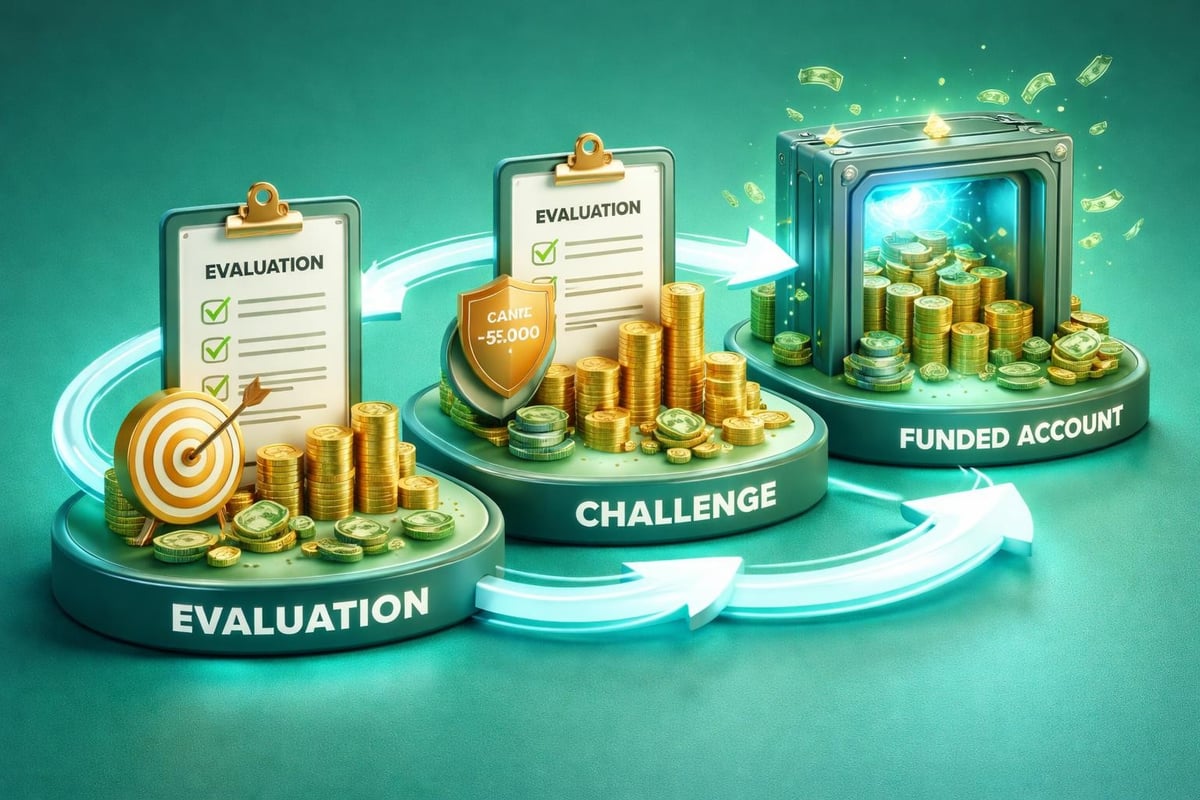
Most programs require traders to complete one or two evaluation phases before receiving funding. During these phases, traders must achieve specific profit targets while adhering to maximum drawdown limits and daily loss restrictions.
| Evaluation Aspect | Typical Requirement | Purpose |
|---|---|---|
| Profit Target | 8-10% of account size | Demonstrates trading capability |
| Maximum Drawdown | 8-10% of initial balance | Tests risk management |
| Daily Loss Limit | 4-5% of account size | Ensures disciplined approach |
| Trading Days | 3-5 minimum | Proves consistency over time |
| Time Limit | 30-60 days | Creates realistic timeframe |
The process to become a funded trader typically involves paying an evaluation fee that grants access to a simulated trading environment where performance is monitored according to predefined rules.
The Evolution of Proprietary Trading Access
Traditional proprietary trading firms historically recruited traders through exclusive networks, requiring extensive financial backgrounds or educational credentials. These firms operated under specific regulatory frameworks, particularly following the implementation of financial reforms.
The Volcker Rule significantly impacted how banking entities could engage in proprietary trading, creating separation between deposit-taking institutions and speculative trading activities. This regulatory change inadvertently opened space for specialized funding companies to emerge.
How Modern Funder Trading Differs
Contemporary funder trading companies operate outside traditional banking structures, focusing exclusively on trader evaluation and capital allocation. This specialization allows for:
Greater accessibility through online evaluation platforms that traders worldwide can access. Geographic barriers have largely disappeared, enabling talent from any location to participate.
Transparent metrics that clearly define success criteria. Traders know exactly what they need to achieve, removing subjective evaluation from the equation.
Flexible capital sizes ranging from small accounts for developing traders to substantial six-figure allocations for proven performers.
The democratization of trading capital represents perhaps the most significant shift. A skilled trader in a developing nation now has the same opportunity as someone in a major financial center, provided they can demonstrate consistent profitability.
Evaluation Paths and Challenge Structures
Funder trading programs typically offer multiple evaluation pathways, each designed to accommodate different trading styles and experience levels. Understanding these options helps traders select the most appropriate route.
Single-Phase Evaluation Programs
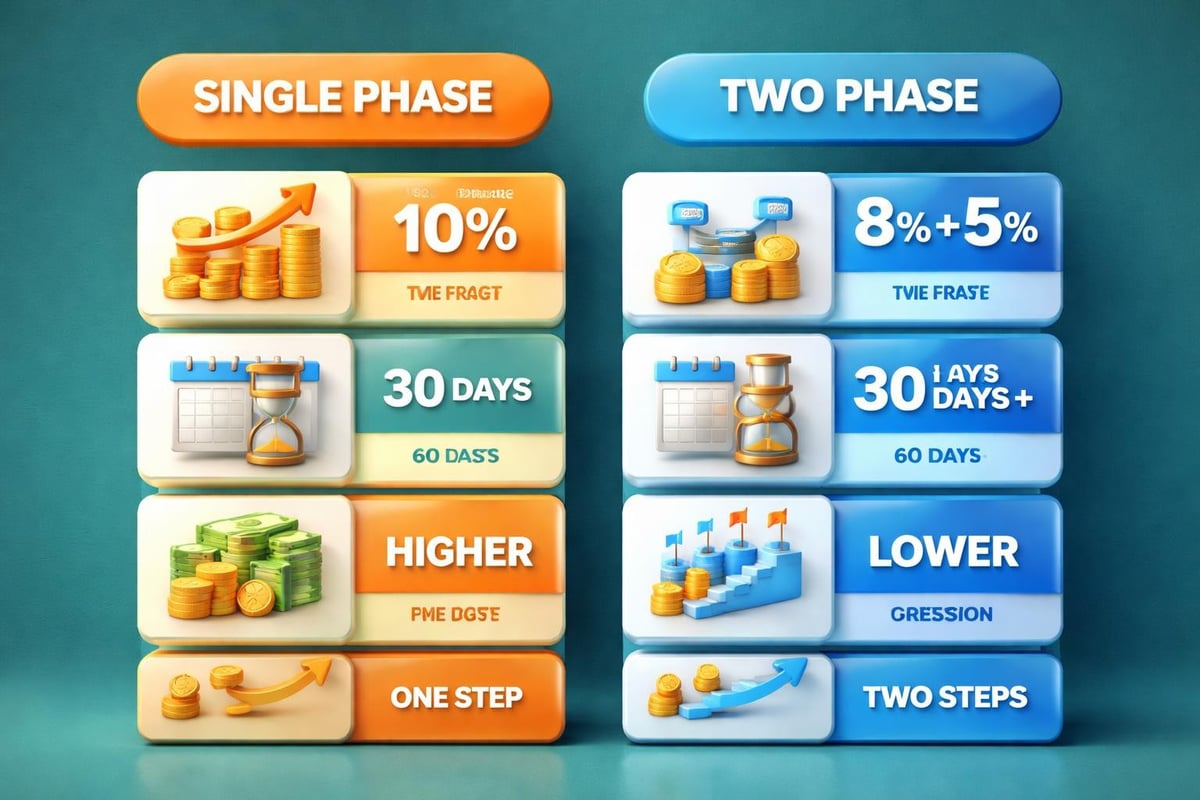
One-phase challenges consolidate all requirements into a single evaluation period. Traders must hit their profit target while maintaining risk parameters, after which they immediately transition to a funded account.
Benefits of single-phase programs include:
- Faster path to funding for consistent traders
- Lower overall evaluation costs
- Simplified rule structures
- Reduced time investment before funding
These programs particularly suit experienced traders who have already developed reliable strategies and risk management protocols. The 5K single-phase option provides an accessible entry point for traders wanting to prove their abilities quickly.
Two-Phase Evaluation Systems
Two-phase programs separate the evaluation into distinct stages, each with specific objectives. The first phase typically requires a higher profit target with standard risk rules, while the second phase often features a lower profit target with maintained risk parameters.
This structure offers several advantages:
- Gradual progression that builds confidence
- Opportunity to refine strategies between phases
- Verification of consistency across multiple periods
- Better simulation of long-term trading requirements
Traders pursuing two-phase evaluations benefit from the structured approach that tests both aggressive profit generation and sustainable trading practices.
Risk Management Requirements in Funder Trading
Proper risk management forms the foundation of successful funder trading participation. Funding companies implement strict risk parameters not to restrict traders, but to ensure long-term sustainability of both the trader's career and the firm's operations.
Understanding Drawdown Limits
Maximum drawdown represents the largest decline from peak equity that a trading account can experience. In funder trading, this metric protects against catastrophic losses while allowing normal trading fluctuations.
Trailing drawdown moves upward with account profits, creating a dynamic safety net that rises as equity grows. If an account grows from $100,000 to $110,000, the trailing drawdown limit also increases by $10,000.
Static drawdown remains fixed at the initial account balance regardless of profits. This simpler approach provides consistent boundaries but doesn't reward profitable performance with increased flexibility.
Daily Loss Limitations
Daily loss limits prevent single-day catastrophic events from ending a trading account. These rules typically reset at midnight server time or at the start of each trading session.
Successful traders approach these limits by:
- Setting personal stop-losses well below official limits
- Reducing position sizes after losing trades
- Implementing maximum loss per trade rules
- Avoiding revenge trading after hitting daily targets
- Taking breaks when approaching warning thresholds
The trading rules established by funding companies reflect industry best practices that protect trader capital and promote sustainable performance.
Profit Sharing and Compensation Models
Compensation structures in funder trading directly impact trader earnings and motivation. Understanding these models helps traders evaluate different funding opportunities.
Standard Profit Split Arrangements
Most funder trading companies offer profit splits ranging from 70% to 90% in favor of the trader. The specific percentage often depends on account size, trading consistency, and program tier.
| Account Balance | Typical Profit Split | Trader's Monthly Earnings at 5% Return |
|---|---|---|
| $10,000 | 80% | $400 |
| $50,000 | 85% | $2,125 |
| $100,000 | 90% | $4,500 |
| $200,000 | 90% | $9,000 |
These splits apply to verified profits after proper account management and adherence to all rules. Some companies process payouts bi-weekly, while others operate on monthly cycles.
Scaling Opportunities
Successful traders often qualify for account scaling, where their trading capital increases based on consistent performance. Scaling criteria might include:
- Achieving three consecutive profitable months
- Maintaining drawdown below 50% of maximum allowed
- Meeting minimum trading day requirements each period
- Demonstrating appropriate risk-per-trade ratios
A trader starting with a $50,000 account might scale to $100,000, then $200,000, and eventually manage multiple accounts simultaneously. This progression can dramatically increase earning potential without additional evaluation fees.
Selecting an Appropriate Funder Trading Program
With numerous funding companies operating in 2026, traders must carefully evaluate their options. Not all programs offer equivalent value, and matching personal trading style with program structure proves essential.
Critical Evaluation Criteria
Regulatory transparency separates legitimate funding operations from questionable entities. Companies should clearly communicate their business structure, terms of service, and legal frameworks. Reviewing the terms and conditions helps traders understand their rights and obligations.
Fee structures vary significantly across providers. Some companies charge higher evaluation fees with more generous profit splits, while others offer lower entry costs with smaller profit shares. Calculate the total cost to funding, including potential retake fees if initial attempts are unsuccessful.
Technology platform quality directly impacts trading experience. Reliable platform connectivity, accurate data feeds, and responsive execution matter tremendously when trading for evaluation or with funded capital.

Matching Programs to Trading Styles
Day traders require different program features than swing traders. Consider these style-specific factors:
For scalpers and day traders:
- Unlimited trading days preferred
- Flexible profit target timeframes
- No minimum holding period requirements
- High-quality execution platforms
- Weekend holding rules (if trading futures)
For swing traders:
- Reasonable minimum trading day requirements
- Longer evaluation periods (60-90 days)
- Accommodation for overnight positions
- Appropriate margin requirements for multi-day holds
The TrueEdge Challenge exemplifies programs designed specifically for active day traders seeking structured evaluation paths.
Common Challenges and Success Strategies
Even skilled traders face obstacles when transitioning to funder trading. Understanding common pitfalls and implementing proven strategies increases success probability.
Psychological Adjustments
Trading evaluation accounts creates unique psychological pressure. Unlike personal accounts where recovery time is unlimited, evaluations impose specific timeframes and strict parameters.
Overtrading represents the most frequent mistake. Traders feeling pressure to reach profit targets quickly often abandon their proven strategies, taking excessive trades that violate their normal criteria.
Successful approaches include:
- Maintaining detailed trading journals throughout evaluation
- Trading smaller position sizes initially to build confidence
- Focusing on process quality rather than profit targets
- Taking mandatory breaks after predetermined loss amounts
- Celebrating small wins to maintain positive psychology
Technical Strategy Considerations
Strategies that work profitably in personal accounts may require adjustment for funded account rules. Position sizing calculations must account for both profit targets and drawdown limits simultaneously.
Risk-per-trade should typically not exceed 1-2% of account balance, ensuring multiple losing trades don't trigger drawdown violations. This conservative approach may feel limiting initially but protects account longevity.
Profit-taking strategies balance the need to reach targets with protecting accumulated gains. Many traders implement partial profit-taking at predetermined levels while letting runners approach larger targets.
The Business Relationship Between Traders and Funding Companies
Understanding the nature of the funder trading relationship helps set appropriate expectations. This arrangement is neither employment nor pure partnership, but rather a specialized performance-based contract.
Legal and Contractual Frameworks
Traders operate as independent contractors, not employees. This distinction carries important implications:
- No employment benefits or protections
- Responsibility for tax reporting and payment
- Freedom to trade with multiple funding companies
- No guaranteed income regardless of effort
- Performance-based compensation only
The disclaimer information provided by funding companies clarifies these relationships and emphasizes the risks inherent in trading activities.
Expectations and Obligations
Funding companies expect traders to:
- Adhere strictly to all stated rules and parameters
- Trade in good faith without employing prohibited strategies
- Maintain account security and credential confidentiality
- Report any technical issues or discrepancies promptly
- Participate in required verification processes
Traders can expect:
- Transparent rule application and enforcement
- Timely profit payouts when criteria are met
- Technical support for platform-related issues
- Clear communication regarding account status
- Fair evaluation of trading performance
Reviews from independent sources, such as the detailed assessment available from joinprop, provide additional perspective on how specific companies fulfill these obligations.
Advanced Considerations for Serious Traders
Experienced traders approaching funder trading as a professional career path must consider strategic factors beyond basic evaluation passage.
Building a Sustainable Trading Business
Professional traders often manage multiple funded accounts across different companies, diversifying their income streams and reducing dependence on any single funding source.
This approach requires:
Capital allocation planning that distributes trading focus appropriately across accounts without overextension. Managing five $50,000 accounts demands different attention than one $250,000 account.
Strategy diversification across accounts can reduce correlation risk. Trading different instruments, timeframes, or methodologies in separate accounts creates more stable aggregate performance.
Administrative systems for tracking performance, tax obligations, and payout schedules across multiple relationships. Spreadsheets or specialized software help manage this complexity.
Long-Term Career Development
Viewing funder trading as a stepping stone rather than final destination opens additional opportunities. Consistent funded traders build track records that can lead to:
- Private capital management opportunities
- Consulting relationships with developing traders
- Educational content creation based on verified results
- Partnership opportunities with funding companies
- Eventual proprietary fund management
The skills developed through funder trading-risk management, emotional control, systematic execution-transfer directly to these advanced career paths.
Technology and Platform Considerations
The technological infrastructure supporting funder trading significantly impacts trader success. Platform selection, connectivity reliability, and data quality all influence trading outcomes.
Trading Platform Options
Most funder trading companies support multiple platform options:
MetaTrader 4/5 remains popular for forex and some futures trading, offering extensive indicator libraries and automated trading capabilities.
cTrader provides advanced charting and order management features preferred by some technical traders.
TradingView integration allows traders to analyze markets on their preferred platform while executing through connected brokerage accounts.
Proprietary platforms developed by specific funding companies may offer unique features but require learning new interfaces.
Data Feed Quality and Execution
Simulated evaluation environments should replicate live market conditions as closely as possible. Key factors include:
- Realistic spread modeling that matches live market conditions
- Accurate historical data for backtesting and analysis
- Minimal slippage on market orders during normal conditions
- Fair execution during news events and high volatility
- Transparent handling of weekend gaps and session transitions
Traders should test platform responsiveness during their typical trading hours before committing to evaluation fees.
Regulatory and Compliance Landscape
The funder trading industry operates in an evolving regulatory environment. While not subject to the same oversight as traditional financial institutions, legitimate companies maintain compliance with applicable business regulations.
Current Regulatory Framework
Most funder trading companies structure their offerings as educational or simulation-based services rather than direct investment vehicles. This positioning affects regulatory classification.
The comprehensive analysis of the Volcker Rule illustrates how banking regulations shaped the development of alternative trading capital sources, though most funder trading companies operate outside this framework's direct scope.
Trader Due Diligence
Responsible traders verify:
- Company registration and legitimate business standing
- Clear disclosure of evaluation and funding terms
- Transparent fee structures without hidden charges
- Accessible customer support and dispute resolution
- Verifiable payout history from actual funded traders
Researching company reputation through trader forums, review sites, and social media provides additional perspective beyond official marketing materials.
Maximizing Success in Funder Trading
Achieving and maintaining funded status requires combining technical trading skills with strategic program navigation. The most successful funded traders share common approaches.
Pre-Evaluation Preparation
Before beginning any evaluation:
- Thoroughly review all rules and clarify any ambiguities with support staff
- Backtest your strategy against the specific profit targets and drawdown limits
- Practice in demo environments using evaluation-sized positions
- Develop contingency plans for various market scenarios
- Establish clear daily and weekly routines that support consistent execution
During Evaluation Performance
Active evaluation periods require disciplined execution:
- Start each day reviewing current account status relative to all limits
- Maintain detailed records of every trade and decision rationale
- Implement predetermined stop-trading rules when approaching risk limits
- Focus on high-probability setups that align with your proven edge
- Resist pressure to force trades when quality opportunities are absent
Post-Funding Excellence
Receiving funding marks the beginning, not the end, of the funder trading journey:
Consistent risk management becomes even more critical when trading live capital. The same discipline that earned funding must continue indefinitely.
Performance tracking helps identify strengths to emphasize and weaknesses to address. Monthly performance reviews reveal patterns not visible in daily trading.
Continuous improvement through education, strategy refinement, and psychological development separates traders who maintain funding from those who lose it.
Exploring various account sizes, such as the 50K single-phase program, allows traders to find the capital level that matches their risk tolerance and profit objectives.
Funder trading has democratized access to professional trading capital, creating opportunities for skilled traders regardless of their personal financial resources. Success in this model requires combining proven trading abilities with strategic program selection and disciplined risk management. Whether you're beginning your funded trading journey or seeking to scale your existing performance, Best Funded offers transparent evaluation paths, competitive profit splits up to 90%, and professional support designed to help traders succeed at every stage of their development.