Want to become a top-tier elite funding trader in 2026? The opportunity is more accessible than ever, but the competition is fierce.
This guide is your roadmap to mastering every stage of the elite funding trader journey. You will discover the latest strategies and industry insights proven to boost your results.
We will break down funding models, challenge types, evaluation steps, risk management, payout structures, and winning tactics for success.
Ready to unlock your potential? Explore how to seize elite funding opportunities, build your skills, and take confident action toward trading excellence in 2026.
Understanding the Elite Funding Trader Model in 2026
The landscape for the elite funding trader has transformed rapidly, offering more opportunities and stricter requirements. In 2026, understanding how proprietary trading firms operate, the nature of funded accounts, and the variety of challenge models is essential for anyone aiming to excel. Let’s break down the latest models, rules, and trends shaping the elite funding trader journey.

The Evolution of Prop Trading and Funded Accounts
Over the last few years, the elite funding trader model has grown in sophistication and scale. Prop firms now offer a range of account types: simulated, demo, and real capital. Simulated and demo accounts allow traders to prove their skills in a risk-free environment, while real capital accounts provide actual market exposure.
For 2026, key industry trends include the proliferation of new evaluation models, stricter rule enforcement, and increasing demands for transparency. Elite Trader Funding, for instance, separates Sim-Funded and Live Elite accounts, requiring traders to meet specific milestones before accessing real capital. Account sizes now range from $10K to $300K, with profit splits as high as 100 percent, making the elite funding trader model highly attractive.
Subscription-based access has become the norm, replacing traditional one-time evaluation fees. This shift allows traders to choose ongoing access, but also introduces recurring costs. The expansion into futures, forex, and multi-asset funding means traders have more markets to choose from than ever before.
Types of Funding Challenges and Their Implications
Elite funding trader firms use a variety of challenge models to assess and filter talent. Common types include Direct to Funded (DTF), 1 Step, End of Day (EOD), Fast Track, Static, and Diamond Hands. Each has distinct rules:
| Challenge Type | Key Features | Best For |
|---|---|---|
| DTF | Instant Sim-Funded, $10K payout cap | Fast payout seekers |
| 1 Step | Intraday trailing, no time cap | Aggressive traders |
| EOD | EOD drawdown, daily loss limits | Swing traders |
| Diamond Hands | Overnight holding, 5% target | Position holders |
| Fast Track | 14 days, no resets, fixed sizes | Quick results |
| Static | Fixed drawdown, higher targets | Risk managers |
Evaluation versus instant funding is a major decision point. Evaluation challenges require traders to hit profit and discipline targets, while instant funding, like DTF, skips the initial phase but often imposes a payout cap and lockout period. Fees can range from $16.50 to $349.50, with monthly costs impacting long-term profitability.
The structure of each challenge directly affects trader psychology and risk-taking. For a deeper exploration of these models and their implications, see Prop Firm Trading Challenge Types. For example, DTF’s $10K payout cap and 30-day lockout can incentivize fast, aggressive trading, which may not suit every elite funding trader. Understanding these nuances is vital for choosing the right path.
The Path from Evaluation to Real Funding
The elite funding trader journey moves through several stages, each with unique criteria. It typically begins with an evaluation phase, where traders must meet profit targets, respect drawdown limits, and trade actively for a set number of days. Successful candidates graduate to Sim-Funded status, often with an activation fee or ongoing subscription.
To progress further, traders must demonstrate continued profitability and strict rule adherence. Only then might they receive an invitation to a Live Elite account, where real capital is at stake. However, transparency around Live Elite criteria remains limited, and not all firms publish their selection standards.
Comparing industry leaders, some firms provide clearer pathways and support than others. The elite funding trader must stay informed, track their progress, and adapt strategies to meet evolving requirements. Consistent performance, discipline, and a clear understanding of each stage’s demands are key to reaching real funding and long-term success.
Step-by-Step: Navigating the Evaluation and Funding Process
Embarking on the elite funding trader journey requires clarity, discipline, and a deep understanding of the evaluation and funding process. Each stage, from selecting your challenge model to pursuing real capital, brings unique rules, opportunities, and risks. Let us break down each step so you can confidently move forward and maximize your elite funding trader potential.

Step 1: Choosing the Right Challenge Model
The first step as an elite funding trader is to select a challenge model that aligns with your trading approach and risk profile. With a range of options like Direct to Funded, 1 Step, EOD, Fast Track, Static, and Diamond Hands, your choice can shape your entire journey.
Consider your trading style. Are you a day trader, scalper, or swing trader? For instance, swing traders may prefer EOD or Diamond Hands models, which allow overnight and weekend holds. Day traders often gravitate toward Fast Track or 1 Step for their flexibility and speed.
Examine account sizes and drawdown limits. Most elite funding trader programs offer accounts from $10,000 to $300,000, with drawdowns between 2.5% and 10%. Matching these metrics to your risk appetite is essential.
Do not overlook reset options and time constraints. Fast Track models, for example, feature a 14-day window with no resets, while 1 Step models let you reset for a fee, adding flexibility if you need a second chance. Review profit targets, typically 5–10%, and ensure they are realistic for your trading strategy.
Use the table below for a quick comparison:
| Model | Best For | Profit Target | Drawdown Type | Reset Option |
|---|---|---|---|---|
| EOD | Swing trader | 5–8% | Trailing | Yes |
| Fast Track | Day trader | 6% | Fixed | No |
| 1 Step | Scalper | 5–10% | Trailing | Yes |
Choosing wisely at this stage sets a strong foundation for your elite funding trader progression.
Step 2: Passing the Evaluation Phase
To advance as an elite funding trader, you must navigate the evaluation phase with precision and discipline. Every firm sets specific profit targets, drawdown rules, and minimum trading days. Understanding these requirements is critical.
Profit targets typically range from 5% to 10%. You will encounter both trailing and static drawdowns. Trailing drawdowns move with your equity high-water mark, while static drawdowns remain fixed.
Discipline is your greatest asset. Maintain consistent position sizing and avoid common breaches like exceeding daily loss limits or trading outside permitted hours. Overtrading is a frequent pitfall. Many traders fail their elite funding trader evaluation by chasing losses or trading impulsively.
Leverage analytics tools and a trading journal to review each session. Tracking your trades helps identify patterns, strengths, and weaknesses, providing actionable feedback.
For a comprehensive overview of the evaluation stages, consider reviewing the Prop Firm Evaluation Process, which details each milestone and common challenges elite funding traders face.
Remember, every evaluation is a test of both your strategy and your mindset. Passing this phase moves you one step closer to funded status.
Step 3: Sim-Funded Accounts—Rules and Realities
After passing the evaluation, an elite funding trader typically receives a Sim-Funded account. This stage introduces new rules, fees, and psychological challenges.
Activation fees range from $80 monthly to $150–$300 for a one-time payment. Most programs require 10 active trading days and meeting a profit threshold before you become eligible for payouts. Sim-Funded means you trade with simulated capital, but the profits can be real.
However, trading in a simulated environment can affect your psychology. Some traders take on excessive risk, forgetting that rules are strictly enforced. Breaching drawdown or daily loss limits can result in losing your Sim-Funded status, even after weeks of progress.
Payouts are real, but only if you follow every rule. For example, you might need to exceed your drawdown by at least $100 and meet daily profit minimums. The elite funding trader who maintains discipline here not only earns payouts but also builds a track record for potential live funding invitations.
The journey from evaluation to your first payout is a true test of patience, rule adherence, and adaptability.
Step 4: Transitioning to Live Funding (If Offered)
The final stage for an elite funding trader is transitioning to a live capital account, sometimes called Live Elite. However, criteria for this promotion are often not published, making transparency a major concern in the industry.
To maximize your chances, focus on consistent profitability, strict rule adherence, and proactive communication with your funding firm. There are no guarantees in this phase, but those who demonstrate reliability and steady returns are more likely to receive live funding offers.
Compared to competitors, some firms provide clearer pathways, while others keep criteria vague. This uncertainty means you must stay vigilant, keep detailed records, and be ready to showcase your trading history.
Ultimately, moving to live funding offers greater earning potential but also increased scrutiny and responsibility. Every elite funding trader should evaluate their readiness before making this leap.
Deep Dive: Challenge Types and Which to Choose
Choosing the right challenge type is crucial for every elite funding trader. With a variety of models available in 2026, understanding their mechanics can make all the difference in your path to funded trading success.
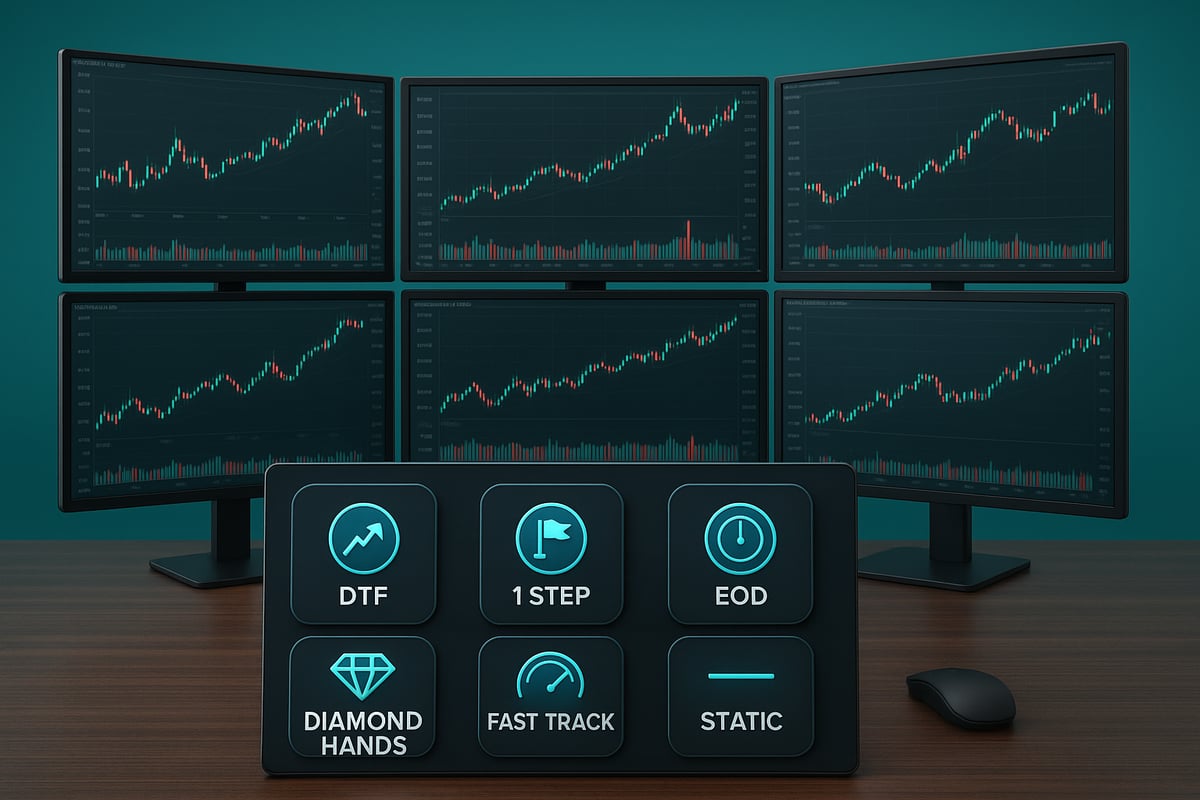
Direct to Funded (DTF): Instant Access, Limited Upside
The Direct to Funded (DTF) model is designed for traders who want to bypass evaluations and start trading immediately. With this approach, an elite funding trader gains access to a Sim-Funded account right away.
DTF accounts often come with a $10,000 payout cap and a 10 percent drawdown limit. There are usually no reset options, and only one account per trader is permitted. After reaching the cap, a 30-day lockout applies before you can earn more.
This challenge type suits experienced elite funding trader profiles who seek quick payouts and are confident in their consistency. However, the lack of growth potential and the strict lockout period may not be ideal for those aiming for long-term scaling.
1 Step Evaluation: Flexibility for Aggressive Traders
The 1 Step Evaluation offers a single-phase test, typically featuring an intraday trailing drawdown with no daily loss limit or time cap. Profit targets scale with the account size, ranging from $3,000 to $20,000.
Elite funding trader candidates can reset their challenge at any time for a fee, usually around $75. The absence of a time restriction allows for flexible pacing, which is attractive to aggressive day traders who want to scale up quickly.
This model is best for elite funding trader applicants who thrive under pressure and can manage risk in fast-paced environments. However, the trailing drawdown requires discipline, as it can quickly erode gains if not managed properly.
EOD & Diamond Hands: For Swing and Overnight Traders
EOD (End of Day) and Diamond Hands models cater to traders who prefer holding positions longer. The EOD challenge uses a trailing drawdown based on the end-of-day balance and includes daily loss limits.
Diamond Hands allows weekend holding, a 5 percent profit target, and a 3.5 percent trailing drawdown. These features are ideal for swing traders or those who want to avoid closing positions prematurely due to firm-imposed restrictions.
An elite funding trader interested in overnight strategies will find these models supportive of their style. The balance between risk and flexibility makes them a solid choice for those who do not trade intraday exclusively.
Fast Track & Static: Speed vs. Simplicity
Fast Track is tailored for those who value speed. It features a 14-day window and a 6 percent profit target, with no resets available. Only $100,000 and $250,000 account sizes are offered, making it suitable for elite funding trader applicants with a higher risk appetite.
Static challenges provide fixed drawdowns and predictable risk, with profit targets of 8 to 10 percent. The simplicity of the static model appeals to traders who want clear boundaries and minimal variable factors.
Both models serve different elite funding trader profiles. Fast Track is best for those who can deliver results quickly, while Static is ideal for disciplined traders who prefer straightforward rules and steady progress.
How to Decide: Matching Model to Your Trading Strengths
Selecting the right challenge starts with honest self-assessment. Consider your trading discipline, available time, and risk appetite. Use analytics and simulation tools to preview potential outcomes for each elite funding trader model.
Here is a table summarizing key features:
| Challenge Type | Drawdown | Profit Target | Reset Option | Ideal For |
|---|---|---|---|---|
| DTF | 10% | $10K Cap | No | Fast payouts |
| 1 Step | Trailing | $3K-$20K | Yes | Aggressive day traders |
| EOD | Trailing EOD | 5-8% | Yes | Swing/overnight |
| Diamond Hands | 3.5% | 5% | Yes | Swing/weekend holders |
| Fast Track | 6% | 6% | No | Speed-focused |
| Static | Fixed | 8-10% | Yes | Simplicity seekers |
If you are looking for more entry paths or want to explore no-cost options, see this helpful guide to Free Funded Trading Account Options.
Ultimately, the best fit for an elite funding trader depends on aligning your strengths with the challenge structure. Take time to trial different models, and remember that understanding the nuances of each challenge type can help you navigate your journey with confidence.
Mastering Risk Management and Payout Strategies
Successfully navigating the elite funding trader journey requires more than just sharp market instincts. Mastery over risk management and payout strategies is what separates consistent earners from those who fall short. In this section, you will discover how to protect your account, maximize your earnings, and avoid common pitfalls that can cost you real payouts.
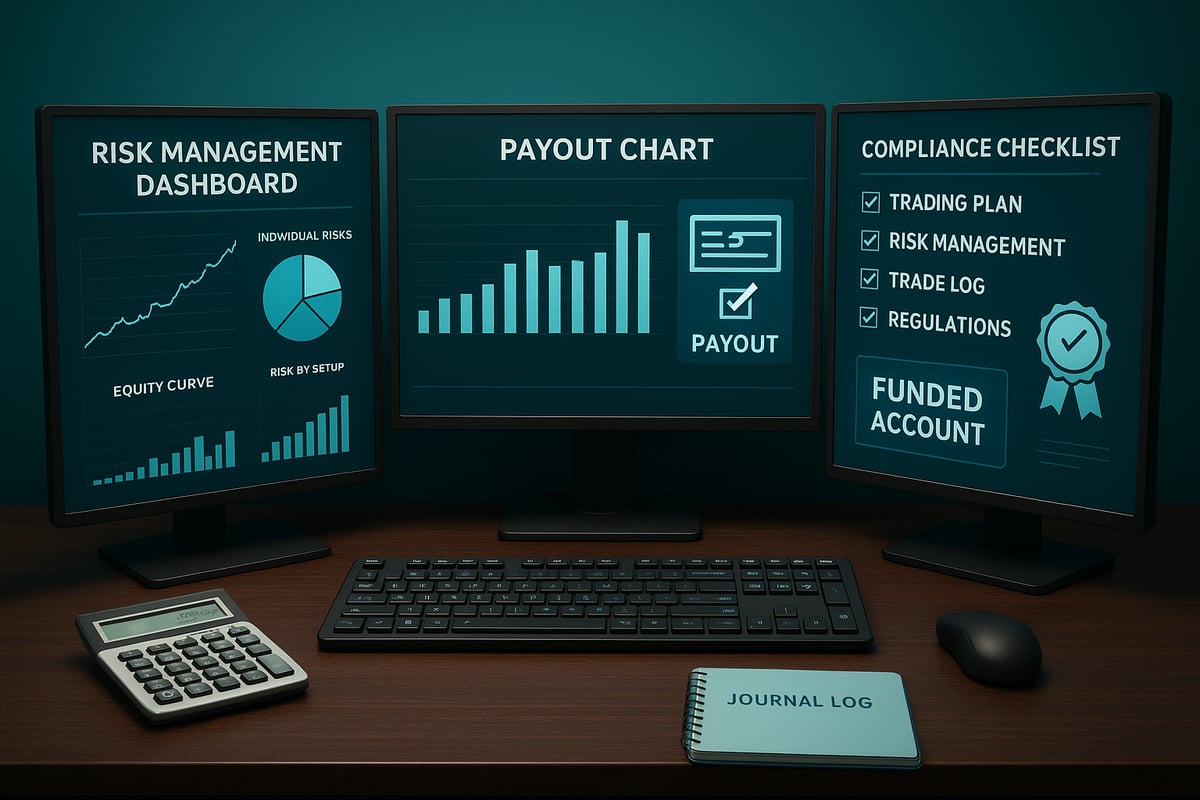
Core Risk Management Rules in Elite Funding Challenges
The foundation of every elite funding trader’s success is robust risk management. You need to understand the differences between trailing and static drawdown, and how each can impact your account. Trailing drawdown decreases as you gain profit, while static drawdown remains fixed, giving more breathing room for your trades.
Position sizing is critical. Always match your trade size to your risk tolerance and account size. Leverage can amplify both gains and losses, so use it cautiously. Daily loss limits are there for your protection—breaching them can lead to immediate disqualification.
The psychological impact of trading simulated capital versus real capital cannot be underestimated. Many traders become overconfident in a demo environment, only to breach rules when emotions run high. For more in-depth risk management strategies for prop traders, explore guides that focus on position sizing and daily drawdown limits.
Consider this scenario: a trader misjudges leverage, exceeds daily loss limits, and loses Sim-Funded status. Discipline and adherence to rules are essential for every elite funding trader.
Payout Structures and Profit Split Insights
Understanding payout structures is vital for maximizing your elite funding trader earnings. Most firms offer profit splits ranging from 80% to 100%. Elite Trader Funding, for example, can provide up to a 100% profit split in specific programs, while the industry average sits at 80-90%.
Eligibility for payouts typically requires surpassing your drawdown buffer by at least $100, and meeting a minimum profit per day threshold. Payouts are available on a weekly or bi-weekly basis, depending on the firm’s policy.
Here’s a quick comparison:
| Account Size | Profit Split | Payout Frequency | Minimum Profit for Payout |
|---|---|---|---|
| $25,000 | 80% | Bi-weekly | $100 |
| $50,000 | 90% | Weekly | $100 |
| $100,000 | 100% | Weekly | $100 |
For an elite funding trader with a $50,000 account, consistent discipline can turn small gains into substantial monthly earnings. Always review the payout rules and keep your strategy aligned with firm requirements.
Managing Ongoing Fees and Subscription Costs
Elite funding trader profitability is not just about trading performance. Ongoing fees, such as activation and monthly subscription costs, can erode your net earnings if not managed carefully. Activation fees may range from $80 per month to $300 for a one-time payment, so it’s crucial to budget accordingly.
Recurring costs must be factored into your overall strategy. The impact of resets, additional challenge fees, or platform charges can add up over time. To maximize value, consider scaling up your account size only after you’ve proven consistent profitability, and minimize unnecessary resets.
Timing your payouts to coincide with subscription renewals can help offset costs. An elite funding trader who plans their withdrawals and account upgrades carefully will maintain profitability even after accounting for fees.
Staying Compliant: Avoiding Rule Violations
Compliance is the silent pillar of every elite funding trader’s journey. Even minor rule violations can result in lost payouts or disqualification. Common pitfalls include:
- Exceeding position limits
- Trading outside allowed hours
- Misunderstanding drawdown rules
- Failing to meet minimum active trading days
Always read your firm’s rulebook thoroughly and check the FAQ for updates. Many elite funding traders have lost substantial payouts due to overlooked details. Use a checklist to ensure every trade aligns with firm policies.
Real trader anecdotes reveal that even a single oversight, such as holding a position over the weekend when it’s not allowed, can end a promising run. Staying vigilant and informed is essential for long-term success as an elite funding trader.
Elite Funding Success Strategies for 2026
Achieving long-term success as an elite funding trader in 2026 requires more than just passing evaluations. You need a blend of discipline, adaptability, emotional intelligence, and continuous improvement. The following strategies will help you build a resilient edge and maximize your funded trading journey.
Building a Winning Trading Routine
Successful elite funding trader performance always starts with a structured routine. Set clear daily and weekly goals, such as specific profit targets, risk limits, or a set number of trades. Use a detailed trading journal to document your setups, outcomes, and emotions after each session.
Leverage analytics tools provided by your funding firm to track metrics like win rate, average risk/reward, and drawdown. Regularly reviewing this data helps you spot patterns and refine your approach.
Engage with trading communities on Discord, forums, or mentorship groups. Peer feedback and real-time discussions can accelerate your learning and help you stay accountable as an elite funding trader.
Adapting to Evolving Industry Standards
The elite funding trader landscape is rapidly changing. New challenge types, evolving rules, and advanced technology mean you must stay agile. Subscribe to firm newsletters, join webinars, and review rule updates regularly.
Participate in free trading competitions to test your skills in real market conditions and gain recognition. These events often mirror the latest industry trends, offering valuable experience without risking capital.
For deeper insights into where the industry is headed, explore Prop trading industry trends 2025. Staying informed about regulatory shifts and technological advancements will keep you ahead as an elite funding trader.
The Psychology of Funded Trading
Maintaining peak performance as an elite funding trader requires strong psychological discipline. High-stakes, evaluation-driven environments can trigger stress, impatience, or demo fatigue. These emotions can lead to impulsive trades or rule breaches.
Combat these challenges with mindfulness techniques, such as short breaks, deep breathing, or meditation. Reward yourself for disciplined behavior, not just profits. Recognize when you need to step back and reset your mindset.
Develop routines that build emotional resilience. Remember, consistent application of your process is what sets apart a top-tier elite funding trader from the rest.
Evaluating Your Progress and Scaling Up
Continuous self-assessment is key for every elite funding trader. Use firm-provided statistics to monitor improvement in profit consistency, drawdown control, and rule adherence. If your results are steady, consider increasing your account size or experimenting with new challenge models.
Watch for signs that you are ready to scale up, such as surpassing profit targets regularly or maintaining discipline under pressure. Trial different models before making a full commitment to ensure the best fit.
Strategic scaling and regular progress reviews will help you evolve from a competent elite funding trader to a consistently profitable one.
Comparing Elite Funding Trader Firms: What to Look for in 2026
Choosing the right elite funding trader firm in 2026 is a pivotal decision that shapes your trading journey. With so many options, understanding what to look for—and what to avoid—ensures you maximize your opportunities and minimize unnecessary risks.
Key Evaluation Criteria for Prop Firms
To make an informed choice as an elite funding trader, start by evaluating the firm’s transparency. Does the company clearly distinguish between Sim-Funded and real capital accounts? Firms that openly publish criteria for live funding transitions offer more trust and clarity. For deeper insight into live funded accounts, review detailed resources like Funded Stock Trading Account Insights.
Fee structure is another crucial factor. Consider all costs: upfront fees, monthly subscriptions, activation charges, and reset fees. These can quickly impact your net profits if not managed carefully.
Look at profit split percentages and payout reliability. Best-in-class firms provide up to 100% profit splits, but the industry average hovers around 80–90%. Confirm the payout frequency—weekly or bi-weekly—and minimum requirements for withdrawals.
Finally, ensure the firm offers access to your preferred platforms, such as TradingView, NinjaTrader, or Tradovate, and supports the markets you want to trade, whether futures, forex, stocks, or crypto.
Red Flags and Deal Breakers
When comparing elite funding trader firms, be alert for red flags. If promotion rules or live funding criteria are unclear, proceed with caution. Hidden fees or unexplained charges can erode your earnings, so read all fine print before committing.
High ongoing costs, especially those not matched by reasonable payout potential, are another warning sign. Some firms lure traders with low upfront fees but offset this with costly monthly charges and limited payout caps.
Community reputation is equally important. Scan forums, Discord groups, and review sites for feedback on payout reliability and support quality. A firm with a history of slow payments or poor communication is rarely a good fit for a serious elite funding trader.
Industry Benchmarks and Data
Understanding industry benchmarks helps you measure where each elite funding trader firm stands. Typical profit splits range from 80% to 100%, while account sizes often span $10,000 to $300,000 or more. Challenge pass rates can vary widely, so it pays to research published statistics.
Subscription models are becoming more prevalent, but some traders still prefer one-time fee options. Use the table below to compare key metrics:
| Metric | Industry Average | Top-Tier Firm Example |
|---|---|---|
| Profit Split | 80–90% | Up to 100% |
| Account Size Range | $10K–$300K+ | $10K–$300K+ |
| Payout Frequency | Bi-weekly/Weekly | Weekly |
| Pass Rate | 8–15% | 10–12% |
The industry has seen explosive growth, with interest in proprietary trading firms rising by over 600% in just four years, according to prop trading industry growth statistics. This makes it even more important to compare firms carefully.
Choosing the Right Fit for Your Goals
Every elite funding trader has unique goals and trading styles. Align firm features—such as account size, platform access, and payout terms—with your strategies and aspirations. Trial different challenge models, if possible, before making a long-term commitment.
Leverage resources like trader testimonials, review sites, and industry comparisons to stay informed. An example: a 47/100 review score for a prominent firm signals room for improvement and should weigh into your decision.
Ultimately, the best fit for you is one that supports your growth as an elite funding trader, offers transparent terms, and provides reliable support throughout your trading journey.
You’ve explored the ins and outs of elite funding challenges, learned how to navigate evaluation stages, and discovered strategies for risk management and long-term success. If you’re ready to put these insights into action, now is the perfect time to take the next step toward becoming a top-tier funded trader in 2026. With Best Funded’s transparent conditions, flexible challenge options, and professional support, you have the tools to prove your skills and keep more of what you earn. If you’re serious about mastering your trading journey, start today and see where your discipline and strategy can take you.