The proprietary trading space is transforming quickly, with topstep funded and its rivals competing for leadership in 2026. As more traders enter the market, they search for the perfect mix of funding access, flexible trading rules, and responsive support.
Choosing between topstep funded and other major prop firms is a critical decision for anyone aiming to maximize their trading journey. This article provides a thorough, data-driven comparison to help you make an informed choice.
We will explore how topstep funded’s structured approach compares to the flexible models offered by other top prop firms. Expect deep dives into evaluation processes, funding options, profit splits, trading tools, support systems, and which types of traders benefit most from each model.
Prop Firm Landscape in 2026: Topstep and Its Main Competitors
The proprietary trading landscape in 2026 is more dynamic than ever. The industry has seen explosive growth, driven by a surge in remote trading, automation, and global accessibility. More traders are seeking funded programs, and the number of prop firms has multiplied. According to Proprietary Trading Industry Trends 2026, asset classes have expanded beyond futures, with stocks, forex, and even crypto becoming standard offerings.
Demand for topstep funded accounts remains high as traders pursue flexible opportunities with global reach. The market is also trending toward faster evaluation models and increased use of technology for trade management and support. Firms are innovating to meet the evolving needs of modern traders.
Topstep stands out as a legacy leader, known for its structured approach, comprehensive education, and strong community support. Unique features like the multi-step evaluation process, the TopstepX trading platform, and TopstepTV educational resources set the firm apart. With a TrustPilot rating of 4.6 out of 5 and over 5,500 reviews, the topstep funded model is trusted by a wide range of traders.
Key competitors such as MyFundedFutures and FTMO have carved out significant market share. MyFundedFutures attracts traders with its single-step evaluation, rapid payouts, and high account caps. FTMO and similar firms focus on multi-asset funding, including forex and stocks, and offer flexible challenge models with global accessibility. Compared to the topstep funded approach, these competitors often emphasize speed and flexibility.
Let’s compare some key features among the top three firms:
| Firm | Evaluation Model | Account Sizes | Monthly Cost | Payout Speed |
|---|---|---|---|---|
| Topstep | Multi-step | $50K, $100K, $150K | $165–$375 | 1–3 business days |
| MyFundedFutures | Single-step | $30K–$600K | $99–$399 | 6–12 hours |
| FTMO | Two-phase | €10K–€400K | €155–€540 | 1–2 business days |
Market share data reveals that topstep funded programs are especially popular with traders who value discipline and education. Meanwhile, MyFundedFutures and FTMO attract those seeking larger accounts and faster funding. Younger traders often prefer flexibility, while those newer to the industry lean toward structure and support.
Regulatory changes in 2026 have also shaped the industry. New rules around capital requirements and trader protections have pushed firms to enhance transparency and technology. Innovations in risk management tools, onboarding, and customer support are now industry standard.
Success stories abound. Topstep has paid out over $16 million to funded traders since 2020, highlighting its influence in the space. MyFundedFutures, though newer, has rapidly grown its user base and boasts some of the highest funding caps in the industry.
The prop trading landscape in 2026 is defined by choice. Whether a trader prefers the discipline and support of a topstep funded account, or the flexibility and scale offered by competitors, the market now caters to every trading style and ambition.

Evaluation Processes: Structure Versus Flexibility
The evaluation process is the heart of every prop trading experience. For traders considering a topstep funded account, understanding how firms assess skill, discipline, and risk management is critical. In 2026, the landscape features both highly structured and flexible models, each catering to different trader profiles. To help you navigate these choices, we break down the main evaluation frameworks, compare criteria, and explore their real-world impact on success rates and satisfaction.

Topstep’s Multi-Step Trading Combine
The topstep funded evaluation is known for its rigorous, multi-step structure. Traders must pass through three distinct phases, each with higher profit targets and tighter rules. For example, a $50,000 account requires a $3,000 profit in the first stage, while $100,000 and $150,000 accounts demand $6,000 and $9,000 respectively.
Every phase enforces strict daily loss limits and a maximum overall drawdown. Traders must also follow consistency rules, which cap daily profits at 50 percent of the total target. If a rule is broken, a reset fee is charged, ranging from $49 to $149 based on account size.
This structure is designed to build disciplined habits. The topstep funded process prioritizes risk management and steady progress, often appealing to those who value clear milestones and accountability.
Competitor Models: Single-Step and Alternative Approaches
In contrast, many competitors offer more flexible evaluation paths. MyFundedFutures uses a single-step challenge, requiring traders to reach a profit target with only an end-of-day drawdown rule, and no daily loss cap. This approach speeds up the route to a topstep funded-style account, but places more responsibility for self-regulation on the trader.
FTMO and similar firms use two-phase evaluations. Their rules are less restrictive, with more generous drawdown limits and fewer consistency constraints. According to recent industry data, MyFundedFutures claims a 25 percent pass rate, significantly higher than the industry average for multi-step models.
For a detailed breakdown of how these evaluation models differ, see this Prop firm evaluation process resource.
Comparative Table: Evaluation Criteria Across Firms
A side-by-side look at the evaluation criteria helps clarify how topstep funded and competitor processes stack up:
| Firm | Steps | Profit Target | Drawdown Type | Time Limit | Reset Fee |
|---|---|---|---|---|---|
| Topstep | 3 | $3k/$6k/$9k | Daily & Max Drawdown | None | $49–$149 |
| MyFundedFutures | 1 | Varies by account | 3% End-of-Day Drawdown | 30 days | $0–$100 |
| FTMO | 2 | Varies by account | Max Drawdown | 30–60 days | $0–$100 |
This table highlights the key differences in progression, risk controls, and costs. The topstep funded evaluation is more gradual, while others offer faster, sometimes riskier, access to capital.
Pros and Cons of Each Approach
Choosing between a topstep funded account and a more flexible competitor comes down to priorities. Here are some important trade-offs:
Topstep Funded:
- Builds discipline and risk awareness
- Slower, but steadier progression
- Clear rules and milestones
Competitors:
- Faster funding, less restrictive
- Greater autonomy, but higher risk for undisciplined traders
- Simplified evaluation steps
Those who thrive with structure may prefer topstep funded, while experienced traders might seek the speed and flexibility of single-step models.
Real-World Examples
Trader experiences reveal how evaluation structures affect outcomes. One trader shared that topstep funded’s multi-step process taught them patience and consistency, leading to long-term profitability. Another noted that passing MyFundedFutures’ single-step evaluation felt more accessible but required strong self-control to avoid rapid losses.
Satisfaction often aligns with trading style and experience. Data shows that topstep funded’s structured model produces lower but more consistent pass rates, while flexible firms see higher initial success but greater variability in long-term results.
Ultimately, the choice between structure and flexibility shapes not just the evaluation journey, but also the trader’s growth and confidence in live markets.
Funding Options and Account Types: Flexibility and Scale
The landscape for topstep funded accounts in 2026 is more dynamic than ever. As traders search for the perfect balance between risk, growth, and flexibility, funding models are evolving across the industry. Understanding these options is key to picking the right prop firm for your trading journey.
Topstep’s Account Levels and Rules
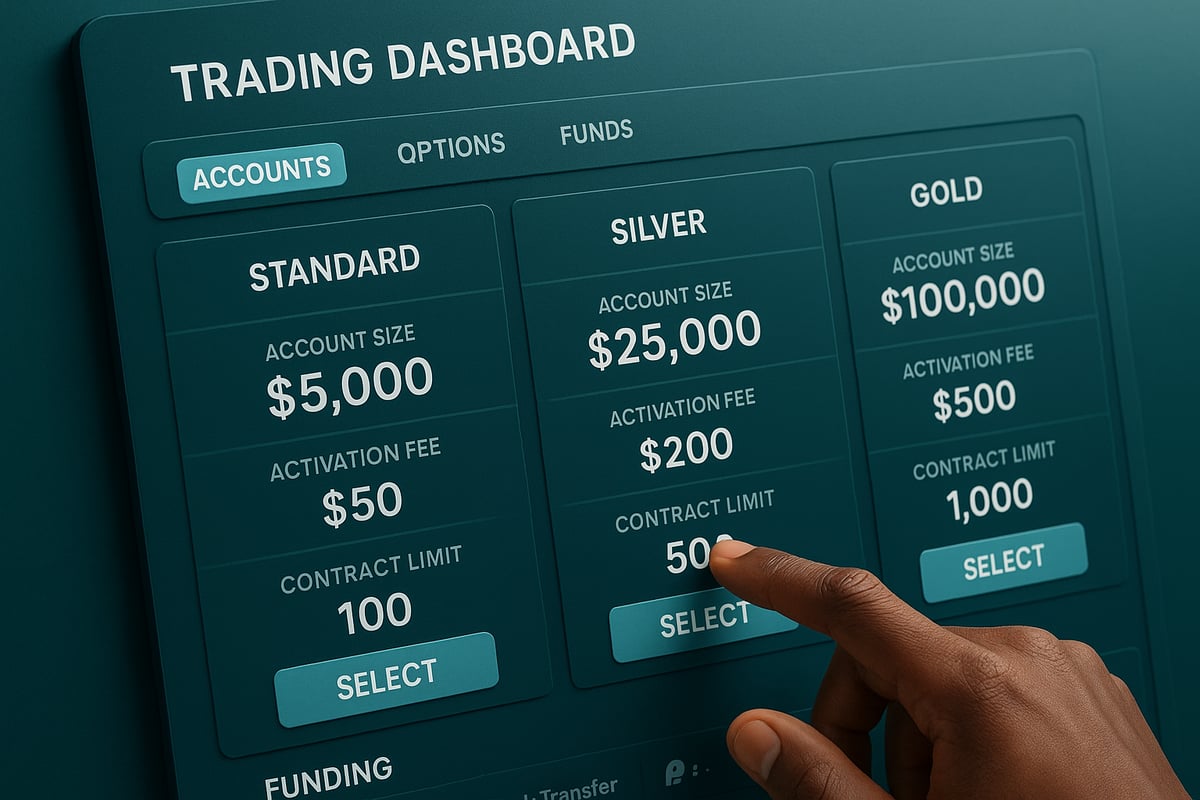
The topstep funded program remains one of the most recognizable in 2026 for its clear structure and disciplined approach. Traders can choose from three main account sizes: $50,000, $100,000, and $150,000. Each tier comes with its own contract limits, allowing up to 5, 10, or 15 contracts per account, respectively.
Monthly fees range from $165 to $375, but frequent 70% discounts and a $149 one-time activation fee make entry more accessible. Topstep also permits up to five funded accounts per trader, offering room for diversification and scaling. For a more detailed breakdown of these account options and how they compare to competitors, see this Topstep funded account review.
Competitors’ Funding Models
Competitors have responded to the demand for greater flexibility by offering a wider range of account types and funding structures. MyFundedFutures, for example, provides Starter, Expert, and Milestone programs, with account sizes ranging from $30,000 to $600,000. This gives traders the freedom to select a capital allocation that matches their risk profile and trading ambitions.
FTMO and similar firms expand the options further. They offer micro accounts for new traders and scaling plans that reward consistent performance with increased capital. Many competitors have also eliminated activation fees, replacing them with one-time or lower recurring costs, and some even provide lifetime access to funded accounts.
Comparative Table: Funding and Account Features
Below is a summary of how topstep funded options stack up against major competitors:
| Prop Firm | Account Sizes | Max Capital | Activation Fee | Number of Accounts | Ongoing Fees | Profit Split |
|---|---|---|---|---|---|---|
| Topstep | $50K, $100K, $150K | $750K | $149 | 5 | $165–$375/mo | 100% up to $10K, 90/10 after |
| MyFundedFutures | $30K–$600K | $600K | None | 3–5 | $99–$399/mo | 100% up to $10K, 90/10 after |
| FTMO | $10K–$200K+ | $400K+ | None | 2–3 | One-time | 80–90% |
This table highlights the breadth of choices now available, with topstep funded accounts focusing on structure and competitors pushing for scale and flexibility.
Flexibility Versus Structure in Funding
Choosing between a topstep funded account and a competitor’s more flexible model depends on your trading style and goals. Topstep’s structured tiers suit those who value clear progression and disciplined risk management. The set contract limits and scaling thresholds encourage gradual growth and consistent habits.
On the other hand, competitors’ customizable funding options appeal to traders seeking rapid scaling. With higher maximum allocations and the ability to manage multiple large accounts, experienced traders can pursue more aggressive strategies. The absence of activation fees and the presence of lifetime access options further increase appeal for those prioritizing flexibility.
Data and Examples
MyFundedFutures stands out for allowing traders to manage up to $600,000 in capital, which is among the highest in the industry. FTMO supports scaling up successful traders, rewarding consistent performance with increased buying power.
For those considering a topstep funded account, it is important to weigh the benefits of structure and community against the broader flexibility offered by competitors. Ultimately, the right choice comes down to your trading objectives, preferred risk profile, and growth ambitions.
Profit Splits, Withdrawals, and Payout Speed
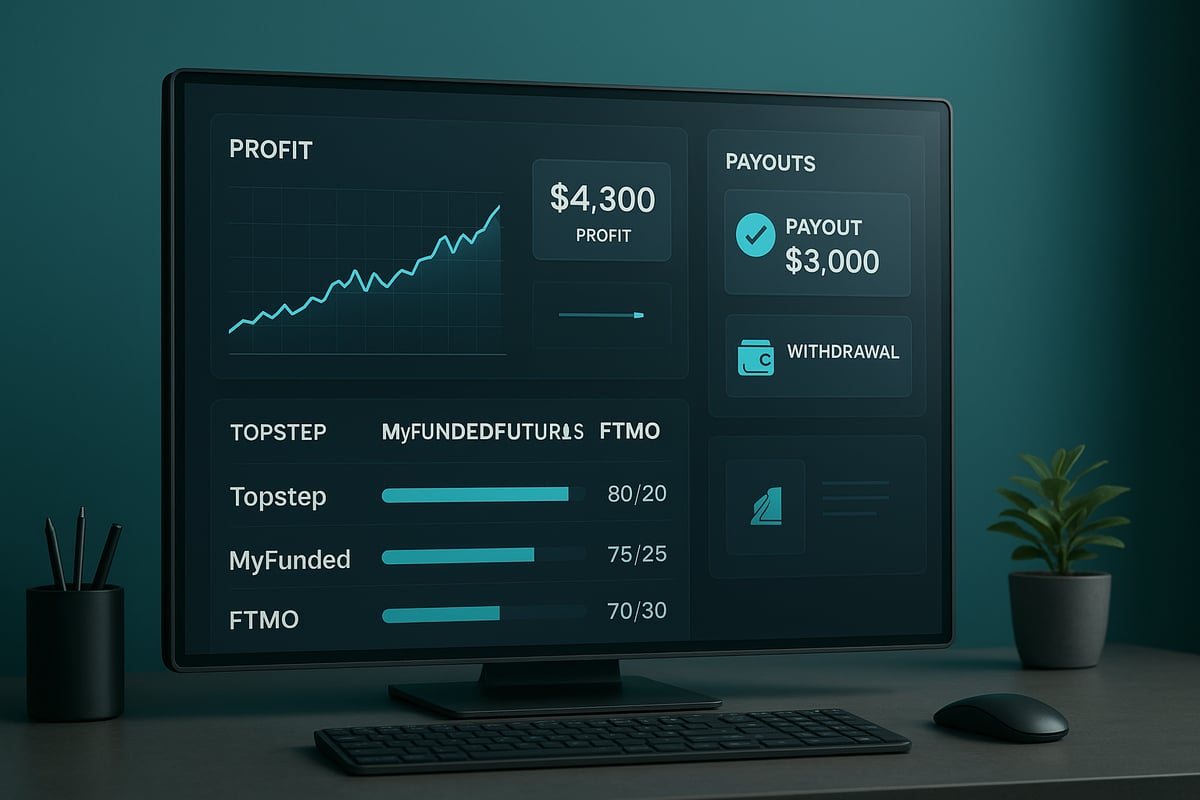
Navigating profit splits and payout speed is a core concern for every trader considering a topstep funded account. The way a prop firm structures its withdrawals and profit sharing can significantly impact both short-term cash flow and long-term growth. In 2026, topstep funded traders benefit from a clear, milestone-driven payout structure. Topstep offers a 100 percent profit split on the first $10,000 earned, after which the split transitions to a 90/10 arrangement in the trader’s favor. This approach rewards consistency and provides a strong incentive for steady performance. To access withdrawals, topstep funded participants must achieve five non-consecutive winning days, each with at least $200 in profit. Full withdrawal access unlocks after 30 winning days, with payouts processed in one to three business days via Wise, ACH, or bank wire. For a more detailed look at Topstep’s offerings, see this comprehensive Topstep prop firm overview.
Competitor Approaches to Profit and Payouts
Competing prop firms have refined their payout models to attract a wide range of traders. MyFundedFutures mirrors topstep funded by offering a 100 percent profit split up to $10,000, followed by a 90/10 split, but introduces rapid payouts—some plans provide withdrawals every five winning days or even bi-weekly. FTMO, another major player, typically offers an 80 to 90 percent profit split with flexible withdrawal options, available monthly or bi-weekly. Minimum withdrawal thresholds vary, with some firms requiring at least $200 and others as much as $1,000, depending on the plan. These variations can influence which topstep funded alternative best suits a trader’s needs, particularly for those who prioritize frequent access to profits.
Comparative Table: Payout Policies
To clarify the differences among leading prop firms, the following table summarizes payout policies, speeds, and requirements:
| Prop Firm | Profit Split | Withdrawal Frequency | Minimum Withdrawal | Processing Time |
|---|---|---|---|---|
| Topstep Funded | 100% up to $10K, 90/10 after | 5+ winning days, 30 for full access | $200 | 1–3 business days |
| MyFundedFutures | 100% up to $10K, 90/10 after | Every 5 winning days or bi-weekly | $200–$1,000 | 6–12 hours |
| FTMO | 80–90% | Monthly or bi-weekly | $200–$1,000 | 1–2 business days |
Topstep funded traders appreciate the predictable milestones, while competitors stand out with speed and flexibility. These distinctions are crucial for traders balancing immediate liquidity with longer-term account growth. Choosing between a topstep funded model and its rivals often comes down to how a trader values structure versus access.
Pros and Cons for Traders
The topstep funded approach is praised for its transparency and reliability. Traders know exactly when profits become available, which helps with planning and discipline. However, reaching the 30 winning days milestone before full withdrawal access can feel slow for those seeking frequent payouts. In contrast, MyFundedFutures and FTMO appeal to traders who want quicker access to funds, though they may impose higher minimums or stricter consistency rules. Ultimately, a topstep funded account is ideal for those who prefer a structured path, while competitors cater to traders who value speed and flexibility.
Data from 2026 shows that topstep funded has surpassed $16 million in total payouts since 2020, reflecting both the firm’s stability and the trust it commands among traders. MyFundedFutures distinguishes itself with lightning-fast withdrawal processing, often within half a day, making it a compelling choice for active traders. When choosing a prop firm, understanding these payout dynamics is essential for aligning trading goals with the right platform.
Trading Platforms, Tools, and Support
Choosing the right prop firm means understanding the trading platforms, tools, and support that shape your trading experience. In 2026, the landscape for topstep funded traders and their competitors continues to evolve, offering diverse solutions tailored to different trading styles and needs.
Platform Offerings Across Firms
The topstep funded program stands out for its proprietary TopstepX platform, designed specifically for futures traders. Alongside TopstepX, traders can access industry-standard platforms such as NinjaTrader, Tradovate, Sierra Chart, and TradingView. These platforms offer robust charting, order execution, and analytics, catering to a range of trading strategies.
Competitors like MyFundedFutures also support NinjaTrader and Tradovate, ensuring flexibility for futures traders. FTMO, on the other hand, is renowned for its MetaTrader and cTrader support, opening the door for multi-asset trading across forex, indices, and commodities. For a detailed look at how FTMO’s platform stack compares with topstep funded solutions, explore the FTMO funded account insights.
Educational Resources and Community
Education is a cornerstone of the topstep funded experience. Topstep delivers through TopstepTV, a dedicated Discord community with over 86,000 members, and professional coaching sessions. These resources foster skill development, discipline, and a sense of belonging among traders.
Competitors have responded by expanding their offerings. MyFundedFutures hosts webinars, live Q&A sessions, and active forums. FTMO organizes trading competitions and provides an extensive knowledge base. For traders, these education and community features can be as valuable as the trading capital itself, especially when navigating the early stages of a prop trading career.
Technology and Performance Enhancements
Performance is critical for active traders in the topstep funded environment. Low-latency execution is prioritized, especially for scalpers and high-frequency strategies. Topstep integrates advanced tools like The Tilt™ Indicator and a built-in trade copier, streamlining multi-account management and risk control.
Many firms now recommend or provide VPS solutions, such as QuantVPS, which ensure stable, high-speed connectivity for platforms like NinjaTrader. Compatibility with third-party tools and seamless integration across devices is now expected. These enhancements help traders minimize slippage and maximize efficiency, giving them an edge in fast-moving markets.
Support and Accessibility
Support quality can make or break the topstep funded experience. Topstep offers 24/7 customer support, multilingual assistance, and a user-friendly trader dashboard. Fast onboarding and responsive service are standard, reducing downtime and frustration for new and experienced traders alike.
MyFundedFutures and FTMO match this with round-the-clock support and rapid onboarding, making their platforms accessible to a global audience. Accessibility features, such as mobile trading and localized content, further broaden the reach. Ultimately, reliable support and easy platform access empower traders to focus on what matters most—consistent performance.
Matching Trader Profiles to the Right Prop Firm
Selecting the ideal proprietary trading partner is a strategic decision that can define a trader’s growth path. With the landscape evolving, understanding where you fit within the spectrum of prop firm offerings is crucial. Let’s map common trader profiles to the most suitable models.
Who Thrives with Topstep’s Structure?
The topstep funded model is best suited for traders who value a disciplined approach and seek robust educational support. New traders often prefer this environment, as it offers clear guidelines, risk controls, and step-by-step scaling. The multi-step evaluation, combined with community resources and coaching, helps beginners develop consistent habits.
Traders who appreciate structure, proven processes, and a track record of reliability gravitate toward topstep funded accounts. The emphasis on gradual progression and risk management fosters long-term development, making it ideal for those who want to build a solid foundation.
If you are looking for accountability and a sense of community, the topstep funded route delivers both, along with access to professional mentorship and ongoing feedback.
Who Benefits from Flexible Competitor Models?
Experienced traders seeking autonomy and larger capital allocations often find flexible prop firms more appealing than topstep funded programs. Firms like MyFundedFutures and FTMO cater to those who want fewer restrictions, rapid funding, and the freedom to implement personalized trading strategies.
High-volume traders, algorithmic specialists, and those with proven track records benefit from single-step or two-phase evaluations. These traders are comfortable managing their own risk without strict daily limits. The ability to access larger account sizes and faster payouts further enhances the appeal of these alternatives to topstep funded models.
For those who prioritize speed, flexibility, and self-directed growth, competitor firms provide a streamlined path to scaling and maximizing trading potential.
Comparative Decision Matrix
Choosing between topstep funded programs and competitors involves weighing several factors. Here’s a summary:
| Factor | Topstep Funded | Competitor Firms |
|---|---|---|
| Monthly Fees | Higher | Lower/One-time |
| Payout Frequency | Milestone-based | Bi-weekly/Monthly |
| Risk Management | Strict | Flexible |
| Account Sizes | $50K–$150K | $5K–$600K |
| Support & Education | Extensive | Varies |
According to Prop Firm Statistics and Trends 2026, traders who prefer structure have higher long-term retention rates, while those choosing flexible models report faster initial growth. Evaluate your priorities—whether it’s stability, speed, or scalability—before selecting a topstep funded or alternative firm.
Real-World Scenarios
Consider a beginner who selects a topstep funded account. They benefit from stepwise guidance, educational content, and clear boundaries, which help them avoid early mistakes and build confidence. This approach nurtures steady progress and long-term discipline.
Contrast this with an experienced trader opting for a flexible competitor. Leveraging a single-step evaluation, they quickly access larger accounts and enjoy rapid withdrawals, maximizing their strategies’ potential. For this profile, the limitations of a topstep funded model might feel restrictive.
Ultimately, aligning your experience, goals, and risk tolerance with the right prop firm model ensures a smoother, more successful trading journey. Whether you choose the structure of topstep funded or the freedom of flexible competitors, understanding your profile is the key to thriving in 2026’s prop trading landscape.
If you’re weighing the pros and cons of Topstep’s structured path against the flexibility of other prop firms, it’s clear that the right partnership can make all the difference in your trading journey. We’ve seen how transparent rules, a variety of challenges, and strong support set some firms apart. If you value the chance to prove your skills with fair conditions and keep up to 90% of your profits, Best Funded might be the flexible, trader-focused alternative you’re looking for. Ready to take the next step and see what you can achieve? Get an account