Imagine transforming your trading expertise into a fully funded account in 2026’s fast-changing financial world. The rise of tradeday funding is unlocking new doors for traders at every level, making it possible to access significant capital, boost profits, and minimize personal risk.
In this guide, you will discover how tradeday funding works, the latest industry trends, and proven strategies to help you navigate the challenges ahead. We’ll highlight success stories, share insights from top performers, and provide actionable steps to help you thrive in the coming year.
Are you ready to seize your opportunity for growth?
Understanding Tradeday Funding in 2026
Tradeday funding is reshaping the world of trading in 2026, providing retail and professional traders with new ways to access capital and scale their strategies. To understand its impact, let us explore its evolution, the key players, the benefits and challenges, and the trends transforming the market.
Definition and Evolution of Tradeday Funding
Tradeday funding enables skilled traders to operate with firm-provided capital, allowing them to profit without risking their own funds. This model has evolved significantly from traditional proprietary trading, which once favored large institutions and limited access for individuals. Over the past decade, the rise of digital platforms and advanced evaluation systems has democratized access, making it easier for retail traders to participate.
According to the Proprietary Trading Management Insight Report Q4 2025, the industry has seen double-digit growth, driven by increased participation and the adoption of technology. Retail involvement in tradeday funding has surged, reflecting a shift toward flexible, performance-based funding models.
Key Players and Market Landscape
The tradeday funding landscape in 2026 is populated by established platforms and emerging firms, each offering unique programs and requirements. Market leaders provide a range of account sizes, evaluation methods, and regional access, allowing traders from diverse backgrounds to join.
| Platform Region | Popular Funding Model | Market Share (%) |
|---|---|---|
| North America | Two-phase evaluation | 38 |
| Europe | One-phase evaluation | 27 |
| Asia-Pacific | Instant funding | 22 |
Growth is particularly strong in the Asia-Pacific and European markets, where regulatory changes and digital adoption have expanded opportunities. Traders now compare offerings based on transparency, support, and withdrawal policies, shaping a competitive global environment.
Benefits and Challenges for Traders
Tradeday funding offers traders several advantages, including leveraged access to capital, profit-sharing opportunities, and reduced personal risk. Many programs allow for flexible trading styles and regular withdrawals, with industry surveys showing average profit splits ranging from 75% to 90%.
However, challenges remain. The evaluation process can be demanding, with strict profit targets and risk controls. Psychological pressure and the need for consistent performance often lead to low pass rates—industry data suggests only 10% to 15% of applicants succeed. For example, one trader leveraged tradeday funding to scale from a $50,000 to a $500,000 account after multiple attempts, illustrating both the potential and the persistence required.
Trends Shaping Tradeday Funding
Major trends in tradeday funding for 2026 include the adoption of AI-driven evaluation systems, which provide real-time analytics and faster, more objective assessments. Gamified challenges and instant payout options are becoming standard features, enhancing trader engagement and satisfaction.
Regulatory environments are also evolving, with new rules impacting evaluation transparency and eligibility criteria. Platforms are increasingly integrating advanced technology for monitoring and compliance, with adoption rates of AI tools rising steadily. The use of real-time analytics helps traders track performance and manage risk more effectively, keeping them ahead in a rapidly changing market.
Step-by-Step Guide: Securing Tradeday Funding in 2026
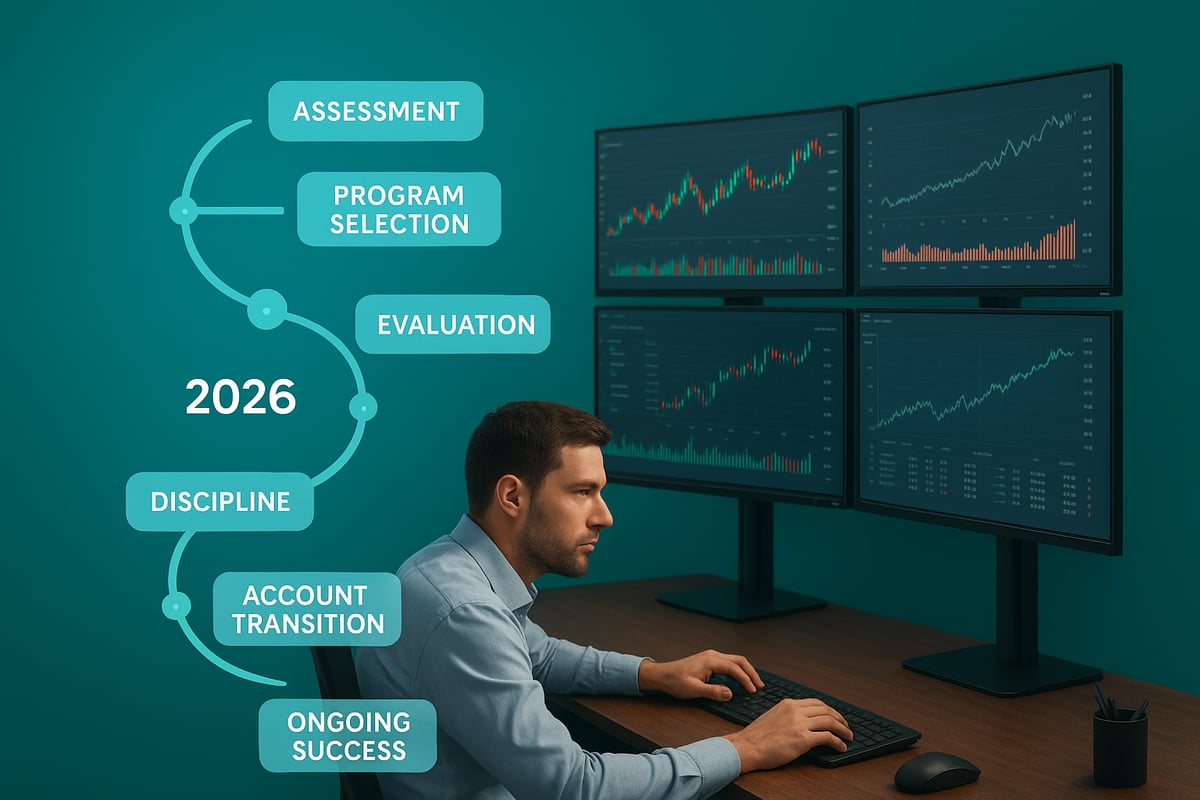
Embarking on your tradeday funding journey in 2026 requires a clear, stepwise approach. This guide breaks down each phase so you can confidently unlock access to capital, minimize risk, and position yourself for long-term success as a funded trader.
Step 1: Assess Your Trading Readiness
Before you apply for tradeday funding, evaluate your trading skills with honesty and precision. Review your recent trading history to identify strengths, weaknesses, and consistency over time.
Use demo accounts and trading simulators to test your strategies in real market conditions. Track your results, focusing on drawdowns, win rates, and risk-adjusted returns. This helps you determine if your approach is robust enough for a funding evaluation.
Ask yourself:
- Am I disciplined with stop-losses and position sizing?
- How do I handle losing streaks?
- Is my trading plan adaptable to changing markets?
A strong, proven track record increases your confidence and the likelihood of passing the tradeday funding evaluation.
Step 2: Choose the Right Funding Program
Not all tradeday funding programs are created equal. Compare evaluation models, such as one-phase versus two-phase structures, to find the best fit for your trading style. For a deeper understanding, explore the differences in one-phase vs two-phase funding programs.
Consider these criteria:
- Account sizes and monthly fees
- Profit split percentages
- Payout frequency and withdrawal rules
| Feature | One-Phase | Two-Phase |
|---|---|---|
| Speed | Faster | More gradual |
| Difficulty | Moderate | Higher |
| Fees | Often higher | Usually lower |
Match program features to your goals and risk profile. This ensures your tradeday funding journey starts with the right foundation.
Step 3: Prepare for the Evaluation Process
Each tradeday funding provider sets specific rules for their evaluation. Study profit targets, daily and overall drawdown limits, and time constraints. Understand which trading strategies are prohibited.
Effective preparation includes:
- Reading platform guidelines thoroughly
- Practicing under real evaluation conditions
- Avoiding over-leveraging or impulsive trades
Common mistakes include missing a rule detail or rushing to hit profit goals. Careful preparation ensures you approach the tradeday funding evaluation with clarity and composure.
Step 4: Execute the Evaluation with Discipline
During the tradeday funding evaluation, consistency is your greatest ally. Stick to your trading plan, respect risk limits, and avoid emotional decision-making.
Track your progress using spreadsheets or platform dashboards. Compare each trade against benchmarks for profit and drawdown.
For example, a successful trader might limit daily losses, take profits methodically, and pause after a winning streak to reassess. This discipline increases your odds of passing the tradeday funding evaluation and sets the tone for future funded trading.
Step 5: Transition to a Funded Account
Passing the evaluation unlocks your funded account. Complete onboarding steps, verify your identity, and set up your trading platform.
Familiarize yourself with new account rules, including scaling options and withdrawal procedures. Understand the expectations for live trading, as real capital involves higher stakes.
The typical timeline from evaluation pass to first funded trade is just a few days. Managing your expectations and following procedures helps you start your tradeday funding experience smoothly.
Step 6: Maximize Your Success as a Funded Trader
Ongoing risk management is essential for maintaining your tradeday funding status. Regularly review your performance, using platform analytics to identify areas for improvement.
Leverage available tools for trade analysis and journaling. Establish a professional routine, setting daily goals and adhering to your risk plan.
Top traders sustain funding by focusing on consistency, learning from setbacks, and adapting to market conditions. Building these habits ensures your tradeday funding journey remains profitable and resilient.
Risk Management and Compliance in Tradeday Funding
Effective risk management is the cornerstone of success in tradeday funding. As the funding landscape evolves in 2026, traders must combine robust strategies with strict compliance to thrive. Understanding both the risks and regulatory landscape is crucial for protecting capital and maintaining long-term funding relationships.

Core Risk Management Principles for Funded Traders
In tradeday funding, setting clear risk limits is vital. Top traders define daily, weekly, and per-trade loss thresholds to protect their capital. Diversification, rather than concentration, helps spread exposure and reduce the impact of market swings.
Practical tools like stop-loss orders, trailing stops, and daily drawdown controls are essential for maintaining discipline. Many traders use automated alerts to monitor their risk profile in real time.
For example, a funded trader using daily drawdown controls can avoid catastrophic losses and stay eligible for continued funding. Consistent application of these principles builds resilience in tradeday funding environments.
Navigating Compliance and Regulatory Requirements
Compliance is increasingly complex in tradeday funding, especially with new global regulations emerging in 2026. Traders must complete KYC (Know Your Customer) and AML (Anti-Money Laundering) checks before accessing capital. Data privacy standards also affect how traders manage and store information.
Understanding regional rules is critical. For instance, some markets enforce stricter algorithmic trading regulations, impacting eligibility. A single compliance misstep, like failing to update documentation, can lead to account suspension.
To navigate these challenges, reference the Trading rules and compliance guide for up-to-date requirements and actionable compliance strategies in tradeday funding.
Psychological Aspects of Risk in Funded Trading
Managing psychological pressure is a defining factor for success in tradeday funding. High-stakes evaluations and live trading can trigger stress, anxiety, and impulsive decisions.
Traders benefit from techniques such as mindfulness, structured journaling, and pre-trade routines to maintain discipline. Regular self-reflection helps identify emotional triggers that might lead to overtrading or risk-taking.
For example, traders who keep a daily journal often spot negative patterns early, allowing them to adjust before losses escalate. Prioritizing mental resilience is as important as technical skill in tradeday funding.
Technology’s Role in Enhancing Risk Management
Technology is transforming risk management in tradeday funding. AI-driven analytics now provide real-time risk assessments, highlighting potential breaches before they occur. Automated alerts and dashboards help traders track performance against predefined risk parameters.
Integrating third-party risk management tools further enhances control. Many platforms report a surge in funded traders leveraging AI to optimize their strategies and reduce manual errors.
With these innovations, traders can react swiftly to market changes, ensuring compliance and capital protection remain at the forefront of tradeday funding success.
Comparing Leading Tradeday Funding Platforms
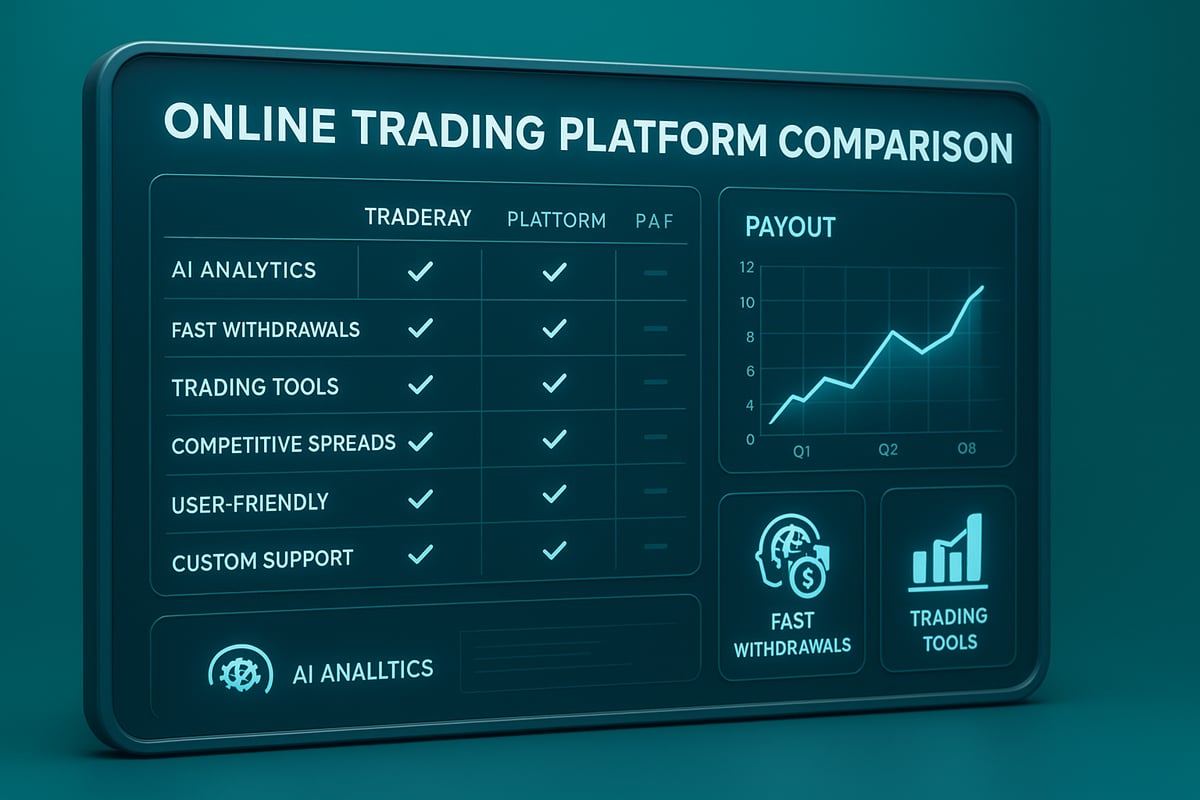
Choosing the right tradeday funding platform in 2026 can shape your trading journey. The market has evolved, offering diverse programs, technologies, and payout structures. Understanding how top platforms compare is essential for maximizing your funding potential and sustaining long-term success.
Evaluation Criteria for Funding Platforms
When evaluating tradeday funding platforms, transparency and clear rules are non-negotiable. Look for platforms with straightforward evaluation processes, robust trader support, and rapid payouts. Community reputation and user reviews offer valuable insights into platform reliability.
A practical approach is to use a checklist:
- Transparent evaluation rules
- Responsive support and resources
- Reliable payout speeds
- Strong trader community
For a deeper understanding of the evaluation phase, reference the Prop firm evaluation process to see how leading platforms structure their assessments. Comparing these elements ensures a fair and growth-oriented trading environment.
In-Depth Review: Best Funded’s Trader-Centric Approach
Best Funded stands out in the tradeday funding space by prioritizing trader experience. The platform offers a range of evaluation challenges, catering to different risk profiles and trading styles. Traders benefit from high profit retention, with payouts reaching up to 90 percent and a global reach that attracts participants worldwide.
Support is a cornerstone of Best Funded’s model, with professional guidance and an advanced dashboard for performance tracking. Many traders report that transparent rules and flexible account options allow them to focus on strategy rather than administrative hurdles. This trader-centric approach positions Best Funded as a preferred choice for serious traders.
Unique Features of Other Top Platforms
Other leading tradeday funding platforms differentiate themselves through innovative features. Some have introduced gamified challenges, while others offer instant funding for qualified traders. Specialized asset classes, such as crypto or commodities, are becoming more common.
AI-driven evaluations are now a standard, streamlining the assessment process and providing real-time feedback. According to recent reports, adoption of advanced technologies has surged, aligning with broader market trends. For more context on this shift, explore how AI’s Impact on Financial Markets in 2026 is shaping the industry.
Pricing, Payouts, and Profit Splits
Cost and payout structures vary widely across tradeday funding platforms. Entry fees can range from modest to premium, often reflecting account size and evaluation complexity. Profit splits are a key metric, with leading platforms offering up to 90 percent retention.
Below is a sample comparison:
| Platform | Entry Fee | Profit Split | Payout Frequency |
|---|---|---|---|
| Best Funded | $150 | Up to 90% | Weekly |
| Competitor A | $120 | 80% | Biweekly |
| Competitor B | $200 | 85% | Monthly |
Evaluating these parameters alongside your trading style ensures you select a tradeday funding partner that aligns with your goals and maximizes your earning potential.
Advanced Strategies for Long-Term Success
Navigating the path to sustainable performance in tradeday funding requires more than just passing an evaluation. Long-term success depends on a combination of robust planning, technological adoption, strong community ties, and continuous growth. Let us explore advanced strategies that can help you secure your place as a consistently profitable funded trader.
Building a Sustainable Trading Plan
Creating a sustainable plan is essential for lasting tradeday funding success. Start by setting clear, realistic goals and defining milestones to measure your growth. Adapt your strategies to current market conditions, ensuring you remain agile when volatility increases.
Track your performance with detailed journals and regular reviews. A quarterly review framework helps identify strengths, weaknesses, and areas for improvement, keeping your tradeday funding journey on track. If you are new to these concepts, reviewing funded trading account basics can provide valuable foundational insight.
- Set specific profit and risk targets
- Adjust your approach as markets change
- Review and refine your plan every quarter
Consistency and adaptability are the foundation of long-term tradeday funding achievement.
Leveraging Technology and Analytics
Technology is transforming tradeday funding, giving traders an edge through automation and analytics. Use trading bots and AI-powered dashboards to monitor performance, identify patterns, and optimize your trades. Integrate third-party analytics tools for deeper insights and efficiency gains.
According to recent studies, a growing percentage of funded traders rely on advanced analytics to outperform the competition. For a deeper dive into how AI agents are benchmarking real-time financial markets, see AI-Trader: Benchmarking Autonomous Agents in Real-Time Financial Markets.
- Automate journaling for unbiased tracking
- Use real-time analytics to make informed decisions
- Benchmark your results against industry standards
Harnessing technology is now a necessity for thriving in tradeday funding environments.
Networking and Community Engagement
Building relationships in the tradeday funding space accelerates learning and growth. Join trading communities, participate in mentorship programs, and attend exclusive events to share strategies and gain new perspectives.
Peer interaction exposes you to different techniques and helps you stay motivated. Many platforms host community-driven competitions, offering opportunities for recognition and collaborative learning.
- Join online forums and chat groups
- Attend trading webinars and workshops
- Participate in community competitions
Active engagement builds your reputation and keeps you connected to evolving trends in tradeday funding.
Continuous Learning and Professional Development
Staying current is vital for tradeday funding success. Engage in ongoing education through webinars, professional courses, and certifications. Follow market news and regulatory updates to ensure your strategies remain compliant and effective.
Continuous learning differentiates top traders in 2026. It is not just about technical skill but also about adapting to new market realities and regulatory changes.
- Enroll in advanced trading courses
- Stay updated with financial news
- Pursue certifications relevant to funded trading
Your commitment to learning can be the deciding factor in achieving long-term tradeday funding results.
Scaling Up: From Funded Trader to Portfolio Manager
Tradeday funding offers clear pathways for growth. As you demonstrate consistency and discipline, you may qualify for larger accounts or even transition into portfolio management roles.
Some traders progress to managing investor capital or joining proprietary trading firms. A well-documented track record and professional approach open doors to these advanced opportunities.
- Scale your account size gradually
- Build trust through transparent reporting
- Explore roles in portfolio or fund management
A case study: One trader began with a small funded account, consistently met targets, and now manages a diverse portfolio for a global trading firm.
Avoiding Common Pitfalls in Tradeday Funding
Even experienced traders face challenges in tradeday funding. Overtrading, emotional decision-making, and ignoring risk rules can quickly jeopardize your funded status.
Learn from failed evaluations and setbacks. Proactive steps, such as maintaining a trading journal and setting daily limits, can help you rebound and sustain your success.
| Common Pitfall | Preventive Action |
|---|---|
| Overtrading | Set daily trade limits |
| Emotional trading | Use mindfulness routines |
| Ignoring risk rules | Implement stop-losses |
Resilience and self-awareness are crucial for longevity in tradeday funding. Many successful traders have lost funding before rebounding stronger through disciplined adjustments.
Now that you have a clear understanding of how Tradeday funding works and what it takes to thrive as a funded trader in 2026, you are ready to take the next step toward your trading goals. With transparent conditions, flexible evaluation paths, and professional support, Best Funded offers you the chance to put your skills to the test and potentially keep up to 90 percent of your profits. If you are motivated to turn your trading expertise into real results, I encourage you to start today and take control of your trading future.